Practice Mindfulness
There is an app for kids called Stop Breathe Think that will make meditation and mindfulness easy and fun for them. This will help them focus, learn to breathe, and even regulate their emotions.
One Thing at a Time
Break big tasks into smaller ones can help them focus because they won’t have to use brainpower to break the task into tinier ones. Like instead of saying, “Go to bed,” try, “Go get your toothbrush then come back,” or “Go put toothpaste on your brush then come back.” Things that take a shorter amount of time give your child less time to become unfocused or distracted.
Make it a Race
Be playful with them. Give them that dose of adrenalin to keep them focused. Try “See if you can get your shoes before I count to ten! Ready! Go!”
Be Okay with Reminders
This is probably the hardest one for us parents. Yes, we want them to be independent, but it’s not the end-all and be-all. They need to have something to help them stay focused. Try visual reminders like checklists on paper or pictures with velcro that they can move as they complete each task. You can move them from verbal reminders to non-verbal reminders. For instance, tap your forehead each time you remind them to focus and eventually just use the sign.
[bctt tweet=”Be okay with reminders with your kids who have trouble focusing.” username=”corkboardblog”]
Provide Proprioceptive Input
Proprioceptive refers to the sensory system that tells us how much pressure is being applied to our body. You can increase input with compression clothing, weighted vests or blankets, or “heavy” work.
Use Essential Oils
Essential oils are a powerful way to support the nervous system. Peppermint is known for increasing mental acuity and Lemon is the official oil of focus. Try diffusing them in the room where you do schoolwork or homework.
Supplements
There are a lot of these out there, but I am a big fan of fish oil for kids. You can also use Vitamin B12 or Magnesium which will give them clarity and energy. For other ways to supplement for ADHD, check Google or with your local naturopath.
Feed and Hydrate
We want our kids’ bodies to be at their absolute best when we’re asking them to focus. We want their body to have all the micronutrients, all the things they need to be successful. Make sure to take regular breaks to fuel them with food rich in protein, good fats, and help them stay hydrated.
Remove Distractions
Distractions come in any form. Provide them with accommodations like noise-canceling headphones or prepare a place in your house that is free from all visual distractions to help them focus.
Use Binaural Beats
The idea behind binaural beats is that you play two tones with slightly different frequencies into each ear (through headphones, ideally), and your brain perceives it as a single sound. Depending on the frequencies used, it’s said that this can change your mental state. Check your app store for free binaural beats apps.
Create Consistent Routines
We want to help our kids to create and rely on muscle memory for the routine things they need to do. While it may not matter if you brush your teeth or put your pajamas on first, create a structured bedtime routine that goes in the same order every night. Eventually, your child’s muscle memory will help them get all the bedtime tasks done with minimal cognitive effort.
Provide High Interest
When kids are interested in something, they are more likely to stay focused. I bet your child focuses more when playing a video game or playing a game with friends compared to the focus you get during math homework. Try to gamify mundane tasks to keep your child’s brain engaged.
What tips and tricks help your child focus?
]]>
Remember that our kids’ brains do not function like neurotypical kids. Sometimes their brains even have structural differences.
Our kids have lower dopamine levels. They also have weak pathways between the reactionary part of the brain and the thinking part. This means their brains aren’t operating in a way that encourages impulse control.
[bctt tweet=”8 smart ways to encourage impulse control in kids with ADHD” username=”corkboardblog”]
Fortunately, there are ways to increase impulse control.
1. Ask Questions.
Instead of nagging or correcting your child, ask them to stop and think about what they’re doing.
2. Practice Mindfulness.
Mindfulness affects the anterior cingulate cortex (ACC). In fact, it increases the brain’s gray matter. Research shows that damage to the ACC results in impulsivity and aggression. Look for mindfulness apps for kids or use the breathing bubble in Stop, Breath & Think.
3. Use Supplements.
Deficiencies in zinc, omega 3’s, and vitamin D can cause impulsivity. Look for high-quality, bio-available supplements derived from whole foods.
4. Get Enough Protein.
Dietary protein is necessary for the body to produce neurotransmitters like dopamine. Kids often have carb-heavy diets that lack adequate protein.
5. Increase Dopamine Naturally.
Exercise and having fun both increase the body’s dopamine levels. What sounds fun to you?
6. Inhale Essential Oils*
Bergmot, Lavender, and Lemon are all linked to healthy dopamine levels. Set a timer for regular essential oil breaks throughout the day.
7. Integrated Listening Therapy.
This multi-sensory therapy helps the brain create new pathways. It strengthens the connection between the reactionary downstairs brain and the thinking upstairs brain.
8. Neurofeedback.
Neurofeedback therapy increases appropriate brain wave frequencies in the prefrontal cortex or thinking brain.
This topic about impulse control was inspired by a member of our private, Facebook, support group. If you’re feeling lost in your parenting journey and need answers that work, click here to join.
*These statements have not been evaluated by the Food and Drug Administration. This product is not intended to diagnose, treat, cure, or prevent any disease. By buying essential oils through the links in this post, I will earn a commission.
]]>There are 3 other diagnoses that have symptoms that mirror ADHD but have different treatment pathways.

[bctt tweet=”There are 3 other diagnoses that have symptoms that mirror ADHD but have different treatment pathways.” username=”corkboardblog”]
Sleep Apnea
Besides impulse control issues, other symptoms include falls asleep immediately after their head hits the pillow, snores, grinds their teeth,
wakes up in the night, has night time accidents or daytime accidents, is hard to understand when speaking, has under eye circles, has crooked teeth or a misaligned bite, wakes up insanely early, is irritable during the day, or has a bad appetite.
Vision Processing
When a child is bright, parents are confused by their difficulties with reading, believing they have already ruled out a vision problem at their yearly eye exam or screening. Often the child is labeled hyperactive, lazy, or slow. What makes this even worse is that many of these problems can easily be mistaken as learning disabilities or attention problems such as ADHD. Vision screenings in school and at the pediatrician’s office typically test only distance vision. Most people think that 20/20 is “perfect vision”, when in fact 20/20 is simply a measurement of what someone is able to see at a distance of 20 feet. Common symptoms for vision processing issues include headaches, poor reading comprehension, homework takes forever, trouble keeping attention when reading, poor handwriting, clumsiness, or car sickness.
Sensory Processing
If your child has misprocessing information that he’s hearing, seeing, or feeling, it can greatly distract him from focusing on the task at hand. Additionally, if your child seeks vestibular or proprioceptive input, he may look hyperactive because of jumping or spinning.
Watch the video below for suggested solutions and what to do if you suspect your child is dealing with any of these three issues.
This post brought to you by Paperless Post.
]]>Join the conversation in our private parent support group for more parenting tips and tricks. Click here to join.
]]>
[bctt tweet=”Check out these 5 tips for how to avoid nagging your child. #parenting” username=”corkboardblog”]
- Set Clear Expectations.
This is especially important for repetitive tasks like chores. Establishing routines and rhythms is really helpful for kids who struggle with executive functioning. Consistency helps our kids feel safe and have the energy to manage other areas of their lives. - Work to reduce verbal cueing.
Instead of saying, “Johnny, stop humming,” try asking him why you would be calling his name. This helps him build body awareness. Eventually, you can move to completely non-verbal cueing. - Use lots of visuals.
A lot of kids with special needs have slow auditory processing times. When we use our words, even if we’re not nagging, they are having trouble processing what we’re saying fast enough to comply. This means that our words are also raising our kids’ anxiety levels. Visuals are great reminders for our kids that they can process quickly. They also help us all to stay consistent without nagging. - Accept Natural Consequences.
If the expectation is that your child has to finish chores before media time, no need to nag or remind. When he asks to play a video game or watch YouTube, just calmly remind him of the rule. It’s even better if you have a visual that spells out, “First chores, then media.” Your child may have some BIG feelings about the rules, but stay calm and don’t get on the crazy train with him. It’s important to not bend the rules to avoid a meltdown.
For more on what to do when your child is getting out of control, click here. - Do a Daily Glow/Grow Ritual.
Before bed, tell your child something you saw that day that really impressed you. Then follow it with something she can work on. This forces you to distill down all the things you would normally nag about all day long into one simple statement that will have more impact that continual nagging all day long. After a while, your child may even be able to guess what your Grow is going to be!
Join the conversation in our private parent support group. Click here to join.
]]>
Why are transitions hard?
Kids with ADHD often struggle with executive functioning. This includes managing time, planning, and organizing. They rely on predictability and routine to feel safe. A change in their daily routine increases anxiety until they adapt to the new schedule.
What should you be doing as summer break approaches?
First, recognize that this could be a challenging couple of weeks. Mentally preparing yourself is more than half the battle. Your child may sleep less, act out more, and be more emotional than normal. Keep some extra white space in your schedule to for decompression and extra meltdowns.
End-of-year activities mean that the school routine is being disrupted. As much as possible keep your home routine stable and predictable.
Create visuals to help your child better understand what is going on. We often make paper chains to countdown to a transition. A picture schedule for each day can also help reduce anxiety.
[bctt tweet=”Transitioning from the school routine to the summer can be hard on kids with ADHD. A little planning goes a long way. Read more . . . #parenthacks #adhd” username=”corkboardblog”]
Use Stabilizing Essential Oils to Help with the Transition
Stabilizing essential oils help steady the nerves. In other words, they encourage a person’s feelings and emotions to go from a rocking boat to solid ground. [1]
These oils have the chemistry that stabilizes feelings and mood:
Vetiver
Cedarwood
Sandalwood
Patchouli
Tumeric
Spikenard
Have your child choose one of the stabilizing essential oils to carry around in a personal inhaler. He can sniff it as often as he wants to help calm and ground his emotions. While you’re at it, choose one for yourself, too!
Summer Tips for Kids with ADHD
Summers have a reputation for being fun and carefree. However, kids with ADHD need structure to function well and feel safe. Consider adding simple routines and rituals to your summer. You can create daily routines such as breakfast, playground time, lunch, rest time, dinner, bedtime. Or weekly routines such as library on Mondays, playdates on Tuesdays, swimming on Wednesdays, and so forth. Planning a weekly meal calendar is helpful, too.
Be sure to include plenty of food, water, and sleep in your summer routine. I have to set a timer to make sure we eat and hydrate at least every 2 hours.
Lastly, be sure to schedule breaks for yourself. Have a list of accessible ways you can refill your bucket. Pair up with a friend to watch each other’s kids once a week. Hire a mothers helper. Plan some date nights.
You can’t control how your child will react to the upcoming transition to summer, but you can make sure you’re prepared for whatever comes your way.
Do you have a question about summer or a tip to share?
Join the conversation in our private Facebook support group.
Click here to join.
DISCLAIMER: Product links may be affiliate links which means that when you purchase through them, I may receive compensation.
References
[1] Hill, David, editor. The DoTERRA Essential Oil Chemistry Handbook. 2nd ed., view.joomag.com/ebooks-doterra-essential-oil-chemistry-handbook/0164882001518721621?short.
]]>
When our kids lie to us, we seem to immediately react. We don’t want to raise liars. We want to have a safe relationship with them. Lying from our kids makes us feel out of control.
The first thing we need to do is recognize why lying gets such a strong reaction from us. Then, we can explore why our kids might be lying.
Most of our kids have a brain that triggers a fear-based fight/flight/freeze response way too often. If someone feels in danger, lying is one self-protective act to help one survive. It’s also important to remember, that when the fear center is triggered, the logic brain is not engaged. This means that even if a child knows lying is wrong, he will still do it. It’s subconsciously reflexive rather than consciously calculated.
Some kids lie because it’s entertaining to watch our reactions. Lying is one of the fastest ways to pull us into an argument. Some kids get an addictive adrenaline rush from these arguments. In this case, lying becomes a sort of game.
Lying may also be confabulation. Kids with ADHD often have memory problems. Confabulation someone makes something up in the absence of a true memory.
Lastly, some kids don’t have the same paradigm about lying that we have. We see it as a serious, trust-breaking offense. Some of our kids don’t have the executive functioning skills to understand the future impact of a lie. If your child came to you through adoption or foster care, lying may not have been seen as bad in their last family culture. It may have been seen as shrewd or even smart.
In all of these cases, lying doesn’t feel like a big deal to our kids, so when we have a big reaction, they won’t understand. Our big reaction will just trigger them. Then we’ve entered into an escalating spiral.
Even though we have an understanding of why lying happens, does not mean we should let our kids get away with it.
Here are some practical tips for dealing with lying.
[bctt tweet=”Here are some practical tips for when your child lies. #parenting” username=”corkboardblog”]
1. Don’t ask questions that will likely produce a lie. Instead of asking, “Did you make that mess?” try, “Hey Johnny, let’s clean up this mess.” If he protests, “I didn’t make it!” respond, “No one said you did, but it needs to get cleaned up, and I need your help.”
2. If you do venture down the road of asking, preface with, “Will you promise to tell me what really happened? Everything is going to be okay. I’m here for you.” Also, try using the phrase, “Tell me the story of _________.” This is less accusatory and less likely to trigger your child to lie. The biggest key here is to accept whatever comes out of your child’s mouth. You don’t have to agree. Use the phrase, “Thanks for sharing.” The more we act like we believe our kids, the more they’ll tell us the truth. You also don’t want to get caught up in an argument that could escalate to something worse.
3. Ignore the lie, not the child. Bryan Post recommends a two-step interaction after a lie. Right after your child lies to you, say, “Everything’s going to be all right. Do you understand?” A couple of hours later, after the incident has passed and your child is regulated, follow up with, “When you tell me a lie, it hurts me. I need you to know that you can trust me, and everything is going to be okay. Do you understand?”
Remember that lying is not the first step to having a child in jail. Take back control of yourself. Don’t let lying control you.
Do you have a question or tip about lying? Join the conversation in our ADHD parent support group on Facebook. Click here to join.
]]>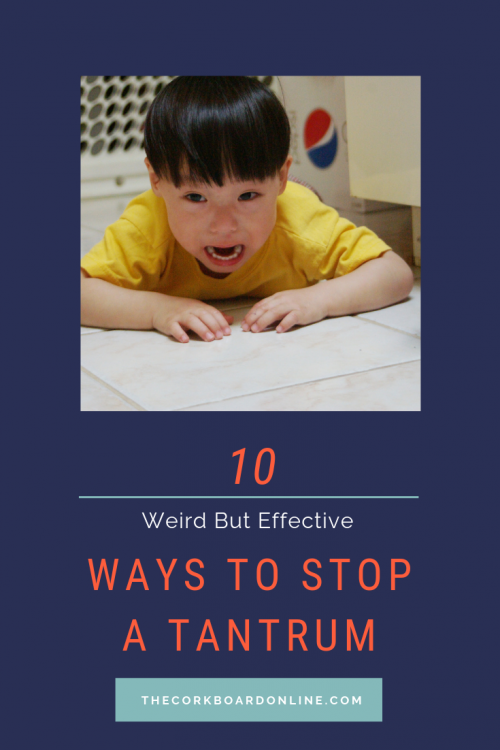
Now would be a good time to note that there are levels of tantrums and dysregulation. Sometimes our kids are so out of control that they need to just burn out all that high energy. In that case, the best thing we can do is keep everyone safe. But sometimes, the tantrum is closer to agitation and grumpiness with some spikes of high energy. Ultimately, it would be best to avoid getting to the tantrum phase, but let’s be real.
Once our children start to escalate, introducing a pattern interrupt to help them re-engage their “thinking brain” is an effective way to stop a tantrum. This is something that is designed to break your focus or commitment to something like a tantrum.
[bctt tweet=”Introducing a pattern interrupt helps a child re-engage their ‘thinking brain’ and stop a tantrum. #momhacks” username=”corkboardblog”]
Over the years, we’ve gathered a bag of tricks. It’s important to have many options up your sleeve because there’s a good chance something will only work once in a while and never twice in a row. That would be too easy, right?
Also, don’t create a new battleground trying to get your child to do these things. Sometimes I can dare my children that they can’t do something to get them to do it. Thanks, Reverse Psychology. Other times, I’ll do it but obviously incorrectly which usually causes my child to insist he show me the right way. (I can be so tricky sometimes.) Even if your child won’t do these suggestions, do them for yourself. They’ll keep you from throwing a tantrum, too 
1. Get upside down.
Changing our orientation in space activates our body’s vestibular system. This is the sensory system that controls spatial intelligence. Vestibular input, like hanging upside down, calms the nervous system. We dare kids to see how long they can do a handstand against the wall. One of our kids also loves to hang upside down on the monkey bars. Sometimes they naturally find inversion by hanging off the sofa.
2. Count.
Counting engages the “thinking brain” which is the part of the brain that keeps the “feelings brain” in check. Chances are that your kids won’t count on command. Our most successful counting intervention happened when a child threatened to run away when angry. We offered to help her count her piggy bank to see how much she’d have when she left. By the time we had counted out all the coins, she was calm enough to use her words to talk out the problem.
3. Read or write.
These activities also involve the “thinking brain.” When your kids are angry or complaining, invite them to write out their list of grievances.
4. Tell a story.
Organizing a story is another way to help our kids engage their “thinking brain.” I like to say, “Tell me the story of what made you so upset.” Or, “Tell me the story of what you wish was happening.”
5. Get crazy.
If you can’t beat the crazy, join the crazy. Do something unexpected that surprises your child. Once my husband walked in my high heels. God, bless him. We’ve also have personified something like a hand and started talking to it about the current situation. In this podcast episode, Robyn Gobbel also talks about matching our kids’ energy and arousal level to lasso their nervous system and then help it regulate.
6. Toss a ball.
Also, according to Robyn, we have a reflex that causes us to catch and return an object that is tossed at us. You may be able to initiate a regulating back and forth game of catch. Just make sure that you toss a soft something! Try a balloon or rolled up pair of socks.
7. Eat something cold.
Any extreme temperature in your mouth acts as pattern interrupt. Sucking a cold, thick smoothie through a straw is a great way to pattern interrupt while also calming the nervous system.
8. Smell an essential oil.
Our sense of smell is the only one of our five senses that bypasses our thinking brain and directly affects our emotion center. Inhaling an essential oil can immediately shift someone’s mood. Let your child choose a scent he’s drawn to.
9. Laugh.
Laughter is good for the soul. Try putting on an irresistibly funny YouTube video while your child is throwing a tantrum. Chances are he’ll get curious about what you’re watching. Then you’ll both be laughing together.
10. Mirroring.
In your best late night DJ voice, repeat the last three words your child yelled at you as a question. Then wait. This is a tactic used by Chris Voss the FBI’s top negotiator. He explains it more in his book, Never Split the Difference.
Do you have a trick for ending tantrums? Leave a comment and help a mama out!
]]>One of the reasons I fell in love with essential oils was for their versatility. I’ve never had buyers remorse over an oil. There are just too many possibilities! (I can’t say that about any of the other natural remedies I’ve bought for my kids.)

1. Seasonal Environmental Support. With the warmer weather and longer days, comes environmental threats which kids from hard places tend to be more reactive to. Essential oils can promote clear breathing and respiratory function.*
2. Toxin-free cleaning. Similarly to pollen, kids from hard places can be more reactive to toxins. Plus, we have enough head tension in our lives from stress, we don’t need to get it from cleaning, too. Cleaning with oils is effective and safe for pets and kids.
3. Gardening. One of the trickiest parts of having a successful garden is keeping bad pests out and attracting good bugs in. Insecticides contain harmful chemicals that could be dangerous to pets or family members. Essential oils contain powerful properties but are safe.
4. Uplifting Mood.* Even with the sun shining, sometimes we still need help feeling energized.
5. Immune Function.* While I’d like to think the sun is blasting away all the nasty stuff, there are still some seasonal threats out there.
6. Sandal-ready Toes. Our toes need a little TLC before they make their spring flip-flop debut! Scrub them down with an invigorating peppermint sugar scrub to get them looking their best. Create a scrub by combining 3/4 cup of sugar and 1/2 cup of liquid coconut oil. Add 10 drops of your favorite essential oil.
7. Preserve Produce. It’s strawberry season where I live. A quick oil soak kills off the spores that cause premature rotting. Place berries in a glass bowl and cover with cool water. Add a splash of white vinegar and a drop of essential oil.
8. Soothing Sore Muscles.* If your body is screaming at you after a long run or a day of gardening, essential oils to the rescue! Add a drop of your favorite oil to a glob of coconut oil and massage into your muscles for a soothing effect.
9. Repelling Bugs. I’m a mosquito magnet. It’s so bad that my husband can use me as bug repellent because they’ll bite me over him. We also get armies of tiny, black ants in our house that find every. single. blessed. crumb. Using an essential spray can repel unwanted pests.
10. Freshen the Air. Essential oils have powerful cleansing and purifying properties when diffused into the air. If your child won’t leave a diffuser alone, make a room spray by adding 20 drops of essential oil to a 4oz. spray bottle of water, witch hazel, or vodka.
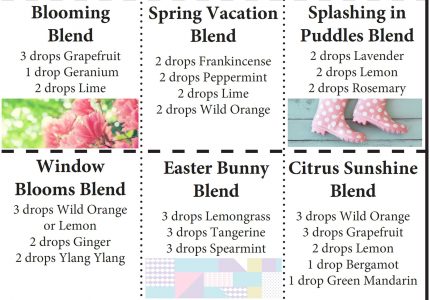
How are you using your essential oils this spring?
[bctt tweet=”Check out these 10 ways to use your essential oils this spring! #essentialoils” username=”corkboardblog”]
*These statements have not been evaluated by the Food and Drug Administration. This product is not intended to diagnose, treat, cure, or prevent any disease.
+This post contains affiliate links.
]]>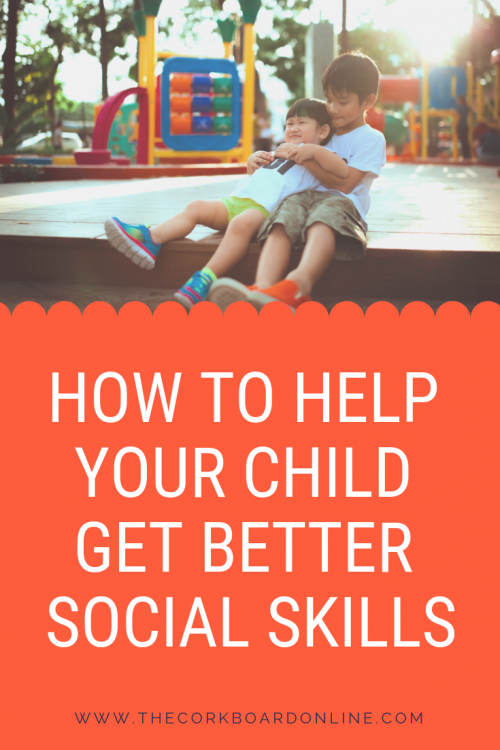
Family nurture groups are good times for children and youth to learn and practice social and emotional skills. Practicing at home is best because it’s where we have the most control over the environment. We can do our best to create a safe place for our children. After all, felt safety and belonging are the foundation of being able to relate to others. The more positive social-emotional interactions a person gets, the more able they are to relate to others. Family nurture groups are safe places to bank more social-emotional interactions.
[bctt tweet=”Family nurture groups are good times for children and youth to learn and practice social and emotional skills.” username=”corkboardblog”]
Additionally, family nurture groups are a time to work on attachment. The skills of attachment are:
I can give care.
I can receive care.
I can get my needs met.
I am alright with me.
I am alright with “we.”
How to Start a Family Nurture Group
1. Choose a time. Be gentle with yourself. Start with once a month. Work up to weekly if you can. Choose a time when everyone is well-fed and hydrated before coming together. Kids from hard places do best with defined boundaries, so set a start and end time for your group.
2. Invite your family. Don’t make this a battleground. Go through the motions at each scheduled time even if no one shows up!
3. Set the rules. Try these simple ones–Stick together; No hurts (physical or emotional); Have fun!
4. Do an activity or two. Again, don’t create a battleground. Sharing power by letting your kids opt in and out is important. Think about activities in terms of energizing or calming. Choose activities based on which way you want to move your family’s energy level. See below for a list of suggested activities.
Suggested activities for nurture groups:
Trust Fall. Have children stand up straight and fall backward into the arms of an adult. These roles can be reversed if the adult starts from sitting.
“Ha” Game. Create a human chain. One person lies down. The next person lays down perpendicularly to the first person with his head on the first person’s tummy. Repeat until everyone is included. The first person says, “Ha!” The second person says, “Ha! Ha!” and so forth. See if you can get through the entire chain without everyone busting out into laughter.
Human Knot. This activity is better for older kids since size is an issue. Everyone stands in a circle and extends their hands toward the center. Each person grabs two different hands, creating a large knot. The goal is to unknot into a circle without anyone letting go.
Listen and Obey games. Red Light/Green Light. Simon Says. Mother May I? Mr. Fox.
Breathing Activities. Play air hockey with cotton balls and straws. Blow the cotton ball back and forth. See who can blow bubbles into a cup of water with a straw for the longest. Extended exhales are important for regulation.
Reading Books.
Play with Feelings Cards.
Role Play. One of our favorites is reversing the parent-child roles.
Massages with Essential Oils or Lotion. If your child won’t tolerate touch, encourage self-massage.
Feeding activities. Start with something fun like trying to toss popcorn into each other’s mouths. WARNING: This is a totally a choking hazard!
Band-Aids®. Take turns asking each other if there’s a hurt that needs a Band-Aid®. Band-Aids®for hurt feelings can go over the heart.
Board and Card Games. Click here for a list of suggestions.
*This post contains affiliate links.
]]>