You’ve probably heard seen me talk write about trust-based parenting before. It’s probably the best thing that’s ever happened to our family, but it’s also ruined our lives. It’s colored the way we view everything. Now, we’re always looking for real relationship instead of programs–ways to be with people.
It’s definitely ruined my ability to get excited about perfectly-rehearsed worship bands and one-way speaker presentations. Don’t get me wrong, by most standards, the worship was emotional and harmonized and the speaker was hilarious and relatable. It’s just that the performance-based experiences fall so flat when held up against actual relationship–being with people. Girls’ Weekend Out consisted of hours of all the attendees facing the stage and staring at the backs of other attendees’ heads and only a few precious minutes–most of which I spent peeing and stuffing my face (not at the same time)–to actually relate to and be with other women.
I agreed to go to Girls’ Weekend Out because 1)FREE! 2) I will use any excuse to get out and 3) I wanted a chance to be with and get to know and be with the women from our church since we’re still relatively new there.
I’m so thankful for our pastor’s wife who is also relational and thought to plan a post-Session 1 midnight snack at a local diner. Those 2 hours were where it’s at. Women being vulnerable and sharing their lives with each other. The exchanging of ideas in an intelligent, respectful way. Seeking truth together. Conversations and relationships that transcend and outlast the emotional high created by a fog machine, drums, and flashing lights. Those should be reserved for concerts and entertainment. Women’s ministry should be about relationship–being with each other, serving, and loving each other.
Imagine your an unchurched woman and your crazy neighbor (the one with dozens of homeschooled, adopted kids who only talks to you when she has to fetch a ball out of your yard) invites you to go to this thing called Girls’ Weekend Out. You pull up to this looming building with smiling, bouncing women who usher you into a large auditorium. Suddenly the lights go down; the fog machine starts; and ladies all around you start singing in what looks like a semi-meditative state with their hands up. Everyone seems to know the words but you. A.W.K.W.A.R.D. It’s so awkward that the women from the stage talk about how you had to be brave to invite your neighbor to here.
On the other hand, what if you’d been hanging out with your neighbor because she was constantly loving your kids well and welcoming them to be with her family. You appreciate how you can ask her about or for anything and she still treats you with dignity and respect. You know she understands the stressors in your life the way only another mom can. Then, one day she invites you to get away with her for a night with her friends. There’s good food, even better conversation, and maybe even an engaging game. Every lady there is genuinely glad you’ve joined them, and you leave feeling refreshed and connected. You’re pretty sure every woman there would give you the shirt off your back if you asked.
Who will you be WITH this week? How are you going to step out of the program-paradigm and be relationally brave?
]]>Last I checked, ALL lives matter and we could use reconciliation across more lines than just race.
As someone raised as a suburbanite, now living in rural Maryland, and owning a business in the heart of the city, I get to see a lot of “sides.” Honestly, I see prejudice and division EVERYWHERE. Have you ever heard the I-95 corridor talk about the I-83 corridor and visa versa?
Let’s get some things straight.
Not all urbanites shop at Whole Foods.
Not all trauma is acute.
Not all homeschooling families are unsocialized.
Not all Asians love math.
Not all homeless people are deadbeats.
Not all young black males are thugs.
Not all police are heroes, but not all police are brutal.
Those are just a couple places to start.
Generalizations just create more divisions and are not helping.
I’ve received multiple messages and phone calls asking,
“What can I do to help?”
The answers aren’t what people want to hear because they’re not easy.
First, start intentionally diversifying your life. Be in relationship with people outside of your natural, comfortable demographic.
Make friends with people older than you and younger than you.
Make friends with people in the city and out of the city.
Make friends with people in a different social class than you.
Make friends with people who are many different colors from many different cultures.
Make friends with people who have a different parenting philosophy than you.
Make friends with people of various faith backgrounds.
Then, set aside your prejudices and actually listen.
It’s in relationship, my friends, where you will find the answer to the question,
“What can I do to help?”
There are no easy fixes.
However, if you’re looking to send more snacks and goodies and kudos, why not head to a depressed neighborhood and find a hard working mom who needs some encouragement? Everyone seems to be supporting the police which is only okay if we’re not excluding other under-recognized groups.
]]>Patrick here, again.
When I think of the times throughout my life where I experienced Christ, those experiences may surprise others.
I remember Brother Bob doing a talent show skit as Elvis, popping out of a coffin singing blue suede shoes.
I think of pot-luck dinners.
I think of when we hosted the Polks at our house while they sought Missionary support in Baltimore.
I remember playing soccer with kids at an orphanage in Ethiopia.
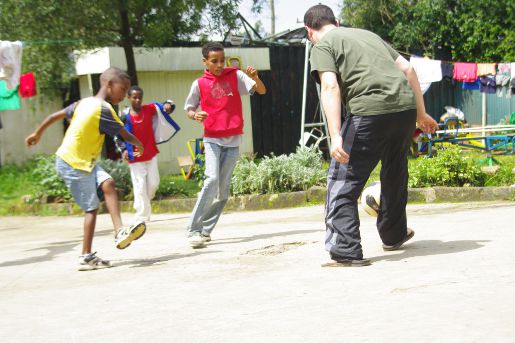
What seems to be the common thread is other people. This seems strange to me, being introverted and all, but it is true. There is something very powerful in that communal experience that I so deeply value. How can someone like me, who has anxiety over experiences with people that I do not know, find such joy and peace in such experiences? I can only come to one conclusion: Christ.
In what situations have you most strongly experienced Christ?

]]>

So, if you know me, you know that I grew up as part of a Catholic family. I deeply value this background now that I am older, but when I was younger, I really struggled. Somewhere around the age of 14, I began to struggle with going to church. My parents, I think, saw this as me not liking religion and trying to escape, or even rebellion. In fact, I really struggled with the fact that I believed in Christ, but could not reconcile my experience of Him—show up to church, sit, stand, kneel, recite, repeat– to what I believed. I was so conflicted because I felt that the thing that I didn’t enjoy, didn’t understand, and couldn’t love was a requirement to what I believed. I hated this, and tried to reject Christianity, but couldn’t, no matter how I tried. When I found others that seemed to truly experience Christ in ways other than those that I was familiar with, I became intrigued. I have spent the last 15 years exploring those ways, but I have come up dry just like when I was 14. There is little difference in the Protestant way of Christianity and the Catholic way of Christianity. Alas, I am left with a desire that has gnawed at me for a long time, yet I have no resolution. So, after a long journey of study (which includes an M.A. in Theology) and years of exploration in Catholic and Protestant religious practice, I am ready to put aside my fears of what others think and put new thought to who Christ and His body are. In the coming days, I will be hijacking my wife’s blog to explore a little.
Will you join me?
click here for the entire series.

“I don’t know what to do, my child is threatening to kill herself.”
“It’s so bizarre, my child is toileting everywhere but in the toilet. He’s 9.”
“I don’t know how much more I can take. The rages don’t seem to be getting better, and I’m exhausted.”
“I have secondary PTSD because of our placement.”
“Am I a bad parent? The behaviors seem to get worse instead of better.”
“I’ve tried almost every church in <insert major city>, and I can’t find one to help this family. They don’t need material things, they just need someone to show they care.”

These are all real life conversations I have with parents and counselors from all over the country on a regular basis. Usually when moms call me, they think they are crazy and that their situation is abnormal. They are the most isolated and discouraged group of people I have ever encountered, but they are also the bravest and strongest. They march on.
Here’s where it gets crazy. The majority of these families have church communities that have failed them–or even kicked them out. We, as a society, have also failed them, but I have much higher standards for churches since they have a mandate to care for these families.
You may be thinking, “Maybe they haven’t made their needs known.” True in some cases. This is a different soapbox, but suffice it to say that we didn’t really have to make our needs known when our daughter had surgery. People just flocked with support (meals, emails, phone calls, and a constant stream of in person questions about how she was doing…for months).
However, I know of families that have not only not been loved well but have actually been asked to leave the church because of their children.
UNACCEPTABLE
I know of families who have been made to feel guilty for not serving in church during this season of their lives. Seriously!?!!? That would be like asking chastising someone who was the full-time caretaker for a terminal cancer patient to stop being selfish and sign up to teach Sunday School…ASAP.
ALSO UNACCEPTABLE
There’s also this school of thought that says, “Well, if the church knew how to help, certainly they would.”
What if I told you there was a parent training course that would be a lifeline to post-placement families in crisis? In cities where it’s running, it’s giving hope to families by the hundreds. It’s keeping marriages together and kids in families. It saved our family.
What if I told you that we’ve been actively looking for our church to run this course in our city for more than 2 years without success. We actually offer to teach the training for free. All the churches need to do is provide space, quality childcare, and commit to supporting the families that come through training. From Gaithersburg to Hunt Valley, we have heard every excuse in the book.
Finding childcare is too hard. Because people are too busy driving to soccer practice to care? These families that need you aren’t going to soccer practice either because their child’s trauma makes it impossible.
I’m not sure we could commit to these families. You’re the church. Isn’t that your job?
There is not enough scripture in the curriculum. It doesn’t seem Christian enough. I’ll really get myself in trouble if I go here.
I’m stopping because each time I write another excuse, my blood pressure starts rising and the tears make it too hard to keep typing.
I had a major agency in Baltimore call me last week and ask when they could start getting help for their families because they’d heard such good things about this training. People, I was on a conference call with every.single.one. of their social workers. In one breath I had to tell them I believed the church had the hope (and training) their families needed, and in the next breath, I had to tell them the churches in Baltimore weren’t willing to step up to the plate. The church is literally standing between families in crisis and the hope that can save them. I’m using my city as an example, but I know this is pervasive across our country. What kind of evangelism is that?
#FAIL.
Church, stop caring about how people park in your lot and start caring for the people in the car.
Church, stop holing yourself up in a multi-million dollar building. Go where the hurting people are. Be proactive.
Church, stop focusing on your comfort and convenience. Ask, “What has Jesus done?” It was neither comfortable nor convenient.
Church, take more breaks from book learning to do real-life application. That’s what we tell our teachers to do with our kids…they need less desk time and more experiences.
Church, take worship out of the box. We spend a lot of time sitting around singing and listening to sermons. That time should certainly not outweigh the time we spend reaching out to hurting families.
Church, instead of constantly preaching at people, take time to listen to their stories.
Church, families are calling, will you please pick up?
<- – -end soapbox- – ->
If you would like to stand in the gap for families, please pass this or something similar on to anyone you know who is part of a church community.
]]>Tweets by @corkboardblog
]]>
Anyway, on to the steps.
- Share a room with one of your siblings for all of your memorable life.
- Get married young (preferrably before graduating college) so you have no idea what it’s like to have your own living space.
- Conceive a child within the first 4 weeks of being married. Bonus points if you are still in college when this happens.
- Give birth to child #2.
- Hang out with your kids instead of using your degree to make money.
- Encourage your husband to go back to school in the evenings so you can get bonus solo time with the kids during dinner and bedtimes.
- Decide to homeschool just when the youngest one is supposed to go off to school.
- Adopt 4 more kids in 3.5 years.
All of a sudden, ALONE has never looked so good. I’m thinking of changing my classification to INTROVERT.
]]>Would you have given money, made a life change to be available, or even moved to a different country?
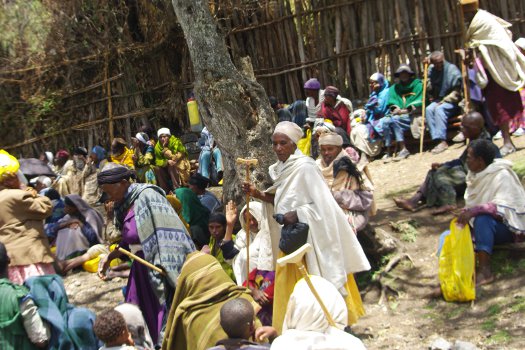
More than 6 million children die each year from preventable causes.*
That’s like the Colorado tragedy 500 thousand times over. And that’s just the children.
What will you do?
*source: Compassion Quick Facts on Poverty
]]>There are, of course, the cliche answers such as take time for myself, live in the moment, get my priorities straight, exercise more, tell corny jokes…you get the idea. But since I hate cliche answers, I kept thinking.
Then there was the Vitamin Water moment yesterday. I love Vitamin Water, but it’s much more expensive than normal water, and I usually can’t justify having it (unless it’s onsale at Costco and the Costco fairy delivers a case). So was the case (pun intended) twice over the past couple months so I’ve been living the high life. It occurred to me as I was driving down the road yesterday, savoring my Vitamin Water, that I may have to just start splurging for little things like Vitamin Water for the huge pay off of happiness.
So my answer could be, “Buy myself Vitamin Water.” Nope, too shallow. I kept thinking.
I realized that happy seems to be a shallow, fleeting emotion by my definition anyway. I am happy or unhappy on and off hundreds of times a day. I would like to think perhaps the question was getting more at a general state so I began to think, “How do you plan to create joy and contentedness for yourself in 2012?”
Mmmm…much deeper. Service. I want to take the focus off of me, myself, and I (and my family) and be intentional about regularly going outside of our comfort zones to serve others. This will also require us to simplify. In order to have time to give away, we need to pare down on how much maintenance our lives need. This may mean giving away material things, clearing our schedule, and lowering perfectionistic expectations. So that’s the plan for 2012.
How do you plan to create happiness (or joy or contentedness) for yourself in 2012?
Join the conversation on BlogHer or enter to win a Kindle Fire in the Life Well Lived Sweepstakes.
]]>





 ]]>
]]>