Practice Mindfulness
There is an app for kids called Stop Breathe Think that will make meditation and mindfulness easy and fun for them. This will help them focus, learn to breathe, and even regulate their emotions.
One Thing at a Time
Break big tasks into smaller ones can help them focus because they won’t have to use brainpower to break the task into tinier ones. Like instead of saying, “Go to bed,” try, “Go get your toothbrush then come back,” or “Go put toothpaste on your brush then come back.” Things that take a shorter amount of time give your child less time to become unfocused or distracted.
Make it a Race
Be playful with them. Give them that dose of adrenalin to keep them focused. Try “See if you can get your shoes before I count to ten! Ready! Go!”
Be Okay with Reminders
This is probably the hardest one for us parents. Yes, we want them to be independent, but it’s not the end-all and be-all. They need to have something to help them stay focused. Try visual reminders like checklists on paper or pictures with velcro that they can move as they complete each task. You can move them from verbal reminders to non-verbal reminders. For instance, tap your forehead each time you remind them to focus and eventually just use the sign.
[bctt tweet=”Be okay with reminders with your kids who have trouble focusing.” username=”corkboardblog”]
Provide Proprioceptive Input
Proprioceptive refers to the sensory system that tells us how much pressure is being applied to our body. You can increase input with compression clothing, weighted vests or blankets, or “heavy” work.
Use Essential Oils
Essential oils are a powerful way to support the nervous system. Peppermint is known for increasing mental acuity and Lemon is the official oil of focus. Try diffusing them in the room where you do schoolwork or homework.
Supplements
There are a lot of these out there, but I am a big fan of fish oil for kids. You can also use Vitamin B12 or Magnesium which will give them clarity and energy. For other ways to supplement for ADHD, check Google or with your local naturopath.
Feed and Hydrate
We want our kids’ bodies to be at their absolute best when we’re asking them to focus. We want their body to have all the micronutrients, all the things they need to be successful. Make sure to take regular breaks to fuel them with food rich in protein, good fats, and help them stay hydrated.
Remove Distractions
Distractions come in any form. Provide them with accommodations like noise-canceling headphones or prepare a place in your house that is free from all visual distractions to help them focus.
Use Binaural Beats
The idea behind binaural beats is that you play two tones with slightly different frequencies into each ear (through headphones, ideally), and your brain perceives it as a single sound. Depending on the frequencies used, it’s said that this can change your mental state. Check your app store for free binaural beats apps.
Create Consistent Routines
We want to help our kids to create and rely on muscle memory for the routine things they need to do. While it may not matter if you brush your teeth or put your pajamas on first, create a structured bedtime routine that goes in the same order every night. Eventually, your child’s muscle memory will help them get all the bedtime tasks done with minimal cognitive effort.
Provide High Interest
When kids are interested in something, they are more likely to stay focused. I bet your child focuses more when playing a video game or playing a game with friends compared to the focus you get during math homework. Try to gamify mundane tasks to keep your child’s brain engaged.
What tips and tricks help your child focus?
]]>
I hardly ever raised my voice until I was parenting children with ADHD and complex trauma. Then, I became a screaming lunatic. I found myself in this place where I didn’t like my hard kids any more which, of course, made me feel worse. I had no idea that my nervous system was falling into Blocked Care. This a subconscious self-protective mechanism that happens when we’re parenting hard kids.
[bctt tweet=”Overcome by mom guilt? Here are 7 really simple things you can do to be a better mom. #parenting” username=”corkboardblog”]
Here are 7 simple things you can add to your life that don’t cost money or take too much time but can have a big impact on how you feel as a mom.
1. Practice Gratitude About Your Life and Your Child.
Set a reminder to list 3 things each day. These can also be any wins from the day. Nothing is too small. I do mine in the morning but you can also do it before falling into bed each day.
Recommended app: Gratitude
Recommended journal: Some Lines A Day*
2. Practice Mindfulness.
Research shows that 10 minutes of mindfulness every day can lessen the possibility we’ll say or do something we’ll regret.[1] I only get in about 2 minutes 5 days a week, but it’s still helpful.
Recommended app: The breathing bubble feature in the Stop, Breath, Think app.
3. Give Positive Touch.
Find a time each day to give your child a positive touch. Even a high five and smile will do. If you’re feeling ambitious, try a hand massage.
4. Impart a Positive Word.
Find a time each day to say something positive to your child. Their behavior often gets us in a downward spiral of negativity. Throwing out a positive comment can drastically change the mood. Try to NOT make it about their behavior, but something you like about them as a person.
5. Laugh.
Laughter is good medicine for the soul. Hop on YouTube and watch a comedy routine or re-runs of America’s Funniest Home Videos. Bonus points if you get your kids laughing, too.
6. Create a Positive Bedtime Ritual.
No matter how bad the day is, end on a positive note. For me, I tell my son, “God made you special, and he loves you very much.” Then, we high five. I can say this even when I’m mad at him because I truly believe it. Also notice, this bedtime ritual actually checks off two of the other things. I’m hitting 3 birds with one stone in less than 30 seconds. Don’t make these things harder than they need to be!
7. Redefine Success.
Don’t feel guilty because you lost your cool or because the school called…again. Choose to define success by YOUR actions. Make yourself a sticker chart and strive to do just 3 of these things daily. If that’s your definition of success, the rest doesn’t matter. Pat yourself on the back each night and wake up each day knowing you can be successful.
Which of these will you start doing today? Post in our Facebook support group, so we can cheer you on!
*Affiliate link.
]]>
[bctt tweet=”Here are 4 things I wish someone had told me when I was new to the world of IEP meetings and adhd. #ieps #adhdparenting #pblogger” username=”corkboardblog”]
Here are four things I wish someone had told me when I was new to the world of IEPs:
1. Stay Calm. While it’s tempting to go all mama-bear on these people who seem to be failing your child, do everything in your power to take deep breaths and remain calm. Trust me, I’ve done this both ways. You have more credibility if you can keep your emotions in check.
2. Record It. Even if you take meticulous notes, it’s likely, you’ll want to go back and review what everyone said. Also, in the unfortunate case that you’ll need help from a student advocate or lawyer, you’ll want them to have the full picture. Rather than use the fact that you’re recording as a threat (which is my natural tendency), emphasize that you want what’s best for your child or that recording is the best way to share information with the other parent.
3. Know Your Rights. You should receive a booklet of parental rights when you request an IEP meeting. If not, look on your school system’s website. It will outline a timeline as well as other important rights. It’s your job to make sure the school system is treating you the way it’s supposed to. Sometimes it’s not malicious, but an oversight. You are your own best advocate.
4. Don’t Sign Anything. Meetings can be emotional and overwhelming. Despite what the team will pressure you to do, don’t sign anything in the moment. It’s your right to take it home and process all the information. Then you can make a more objective decision if the outcome of the meeting is a good fit or if you need to continue to advocate.
Are you unsure of what can happen at school to best set your child up for success? Are you not even sure what to ask the school to do?
Click here to download a list of over 100 IEP accommodations.

[bctt tweet=”To medicate or not to medicate? #adhdparenting” username=”corkboardblog”]
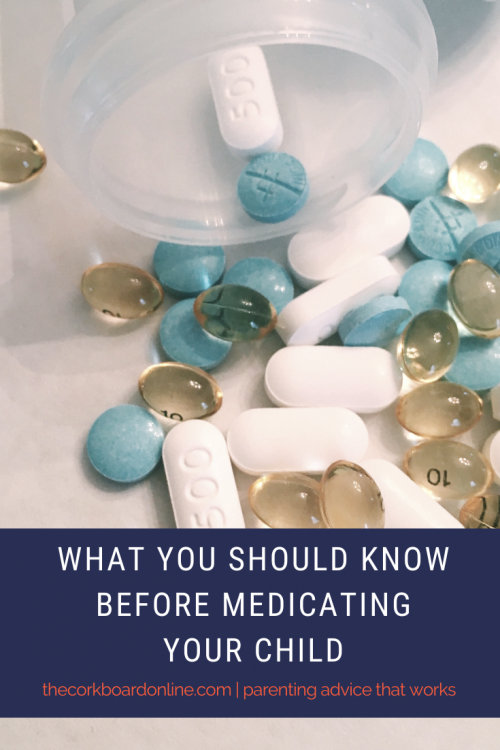
In full disclaimer, I am not a medical professional and cannot diagnose or prescribe. I am not taking a position for or against medication today, but want to give you some things to consider.
1. This is a personal decision between you and your medical provider. Put horse blinders on to the unsolicited opinions of extended family and friends. Having a mental boundary to those things upfront will make them easier to handle.
2. Understand what medication can and can’t do. It alters brain chemistry which can improve focus or stabilize mood. It cannot magically instill lagging skills of executive function and organization. This is also true of natural treatment such as supplements and essential oils. This is why having parenting tools that work for kids with ADHD is so important.
3. Understand the brain science. Remember that ADHD is a physical brain disability with behavioral symptoms. The brain can have trouble focusing for one of two reasons. Too much brain activity or too little. The behavior symptoms look the same. A stimulant medication for a brain that is overactive will backfire. Ask your medical professional about a QEEG brain scan that can help you know the root of the problem so you can better address it.
4. Educate yourself. Before starting your child on a medication, understand how it works in the brain, the side effects, how long it takes to see a difference, how long it takes to get to a therapeutic dose, how long it takes to wean off if necessary. What happens if your child refuses? Is that a safety concern?
]]>
How do you increase felt safety for your child?
]]>Before we had these tools, our kids go-to was talking back or throwing a tantrum or worse!
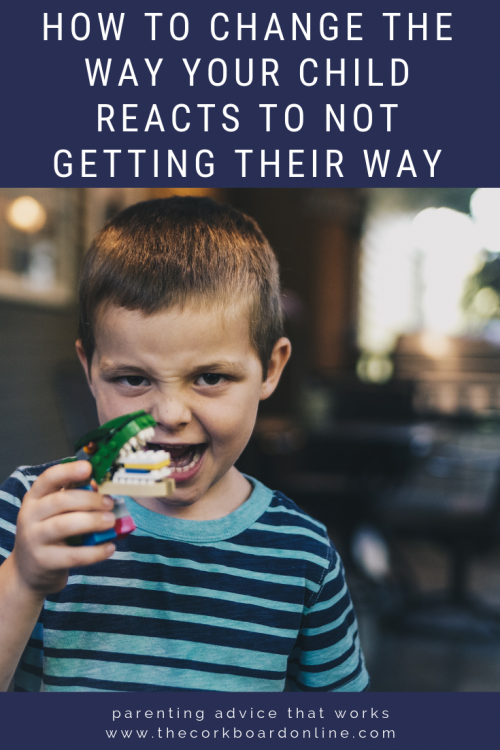
Have you heard of re-dos, compromises, and delayed or conditional “Yesses”?
Re-dos gives our children chances to try again with a better response. Giving them these opportunities helps create a new neural pathway in their brain. If we think about our kids’ responses as ruts in a dirt road, re-dos start creating a new rut. With each re-do, the undesirable response rut gets shallower and shallower and the appropriate response rut gets deeper and deeper. Remember that kids need to be regulated to do a proper re-do. Forcing a re-do once a tantrum is already underway will make you flip your lid too!
[bctt tweet=”How to Change the Way Your Child Reacts to Not Getting Their Way” username=”corkboardblog”]
Compromises are a tool we give to our kids to give them some shared control. They are a more appropriate response to throwing a tantrum. When we ask them to do something, they may ask for a compromise to do it later or to have help doing it.
A delayed “Yes” is when instead of saying “No,” we say something like, “Ice cream sounds like a great idea! Let’s put it on the calendar for tomorrow!” A conditional “Yes” is when we say something like, “I’d love to get you an ice cream after you finish your veggies.”
Find a time to use one of these strategies today and report back how it went in our private Facebook support group. Click here to join.
Remember, you’re a great parent, doing important work. Keep it up!
]]>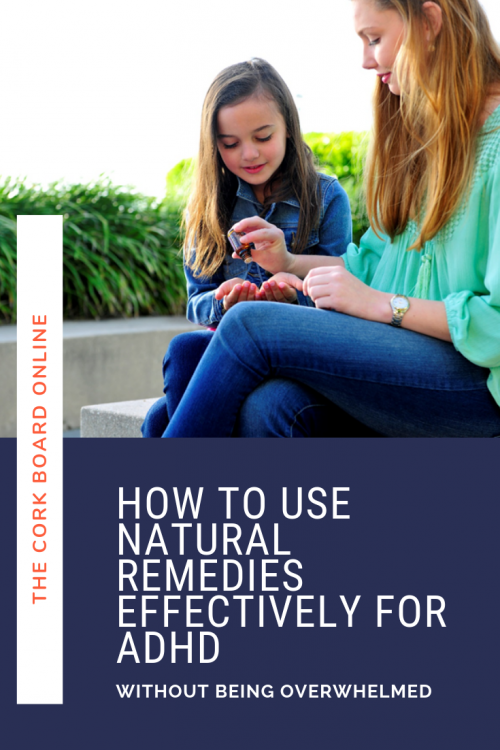 If you Google, “ADHD natural remedies,” you’ll get over 7.5 million hits. This is a hot topic but that also means information overload.
When testing natural remedies for ADHD, here are some tips and tricks so you know if it’s actually working, and if it’s worth continuing to spend time and money on.
1. Start keeping a daily behavior journal that tracks circumstances, food intake, supplements given, and behaviors.
2. Choose your remedies based on well-documented research. Pubmed is your friend.
3. Make a list of things you would like to try. Then rank the list based on how big of an impact you think it will have and ease of access.
4. Only try ONE thing at a time and give it time to make a difference. I recommend trying something for at least a month.
5. At the end of the trial period, evaluate if it’s worth continuing, then move on the next thing.
[bctt tweet=”When testing natural remedies for ADHD, here are some tips and tricks so you know if it’s actually working, and if it’s worth continuing to spend time and money on. #adhd” username=”corkboardblog”]
Remember, you’re a great parent, doing great things!
DISCLAIMER: I’m not a medical doctor, nor is this meant to be medical advice. If you have specific questions about medication or interactions, please consult your medical professional.
]]>
Remember that our kids’ brains do not function like neurotypical kids. Sometimes their brains even have structural differences.
Our kids have lower dopamine levels. They also have weak pathways between the reactionary part of the brain and the thinking part. This means their brains aren’t operating in a way that encourages impulse control.
[bctt tweet=”8 smart ways to encourage impulse control in kids with ADHD” username=”corkboardblog”]
Fortunately, there are ways to increase impulse control.
1. Ask Questions.
Instead of nagging or correcting your child, ask them to stop and think about what they’re doing.
2. Practice Mindfulness.
Mindfulness affects the anterior cingulate cortex (ACC). In fact, it increases the brain’s gray matter. Research shows that damage to the ACC results in impulsivity and aggression. Look for mindfulness apps for kids or use the breathing bubble in Stop, Breath & Think.
3. Use Supplements.
Deficiencies in zinc, omega 3’s, and vitamin D can cause impulsivity. Look for high-quality, bio-available supplements derived from whole foods.
4. Get Enough Protein.
Dietary protein is necessary for the body to produce neurotransmitters like dopamine. Kids often have carb-heavy diets that lack adequate protein.
5. Increase Dopamine Naturally.
Exercise and having fun both increase the body’s dopamine levels. What sounds fun to you?
6. Inhale Essential Oils*
Bergmot, Lavender, and Lemon are all linked to healthy dopamine levels. Set a timer for regular essential oil breaks throughout the day.
7. Integrated Listening Therapy.
This multi-sensory therapy helps the brain create new pathways. It strengthens the connection between the reactionary downstairs brain and the thinking upstairs brain.
8. Neurofeedback.
Neurofeedback therapy increases appropriate brain wave frequencies in the prefrontal cortex or thinking brain.
This topic about impulse control was inspired by a member of our private, Facebook, support group. If you’re feeling lost in your parenting journey and need answers that work, click here to join.
*These statements have not been evaluated by the Food and Drug Administration. This product is not intended to diagnose, treat, cure, or prevent any disease. By buying essential oils through the links in this post, I will earn a commission.
]]>There are 3 other diagnoses that have symptoms that mirror ADHD but have different treatment pathways.

[bctt tweet=”There are 3 other diagnoses that have symptoms that mirror ADHD but have different treatment pathways.” username=”corkboardblog”]
Sleep Apnea
Besides impulse control issues, other symptoms include falls asleep immediately after their head hits the pillow, snores, grinds their teeth,
wakes up in the night, has night time accidents or daytime accidents, is hard to understand when speaking, has under eye circles, has crooked teeth or a misaligned bite, wakes up insanely early, is irritable during the day, or has a bad appetite.
Vision Processing
When a child is bright, parents are confused by their difficulties with reading, believing they have already ruled out a vision problem at their yearly eye exam or screening. Often the child is labeled hyperactive, lazy, or slow. What makes this even worse is that many of these problems can easily be mistaken as learning disabilities or attention problems such as ADHD. Vision screenings in school and at the pediatrician’s office typically test only distance vision. Most people think that 20/20 is “perfect vision”, when in fact 20/20 is simply a measurement of what someone is able to see at a distance of 20 feet. Common symptoms for vision processing issues include headaches, poor reading comprehension, homework takes forever, trouble keeping attention when reading, poor handwriting, clumsiness, or car sickness.
Sensory Processing
If your child has misprocessing information that he’s hearing, seeing, or feeling, it can greatly distract him from focusing on the task at hand. Additionally, if your child seeks vestibular or proprioceptive input, he may look hyperactive because of jumping or spinning.
Watch the video below for suggested solutions and what to do if you suspect your child is dealing with any of these three issues.
This post brought to you by Paperless Post.
]]>If you're anything like me, you get to the end of the day and feel like all you did was yell at kids. Most of the items on your to-do list remain unchecked. You wish you had more patience, and you wish you could focus enough to accomplish something. Anything.
I also have a child who is easily distracted and the definition of impulsive. I feel like I spend all day repeating, "Stop and think," "Focus!" "Stop! WHY WOULD YOU DO THAT?!?!"
As a parent coach, I can't stay in this state. Not that anyone would want to, but, for me, especially, it feels horribly hypocritical.

So is there a way to go from stressed and grumpy to peaceful and content? A way to go from frantic and harried to focused and productive?
I can't magically change your life, but I can suggest these 2 easy changes that are saving our life right now.
Easy Change #1
Give everyone Copaiba. Derived from the bark of a South American tree, Copaiba helps to calm and soothe the nervous system. It has a higher concentration of the chemical that makes CBD oil all the rage in a way that directly affects your brains receptors. CBD oil can only indirectly affect them. Additionally, Copaiba is a powerful antioxidant and supports many other systems of your body.
I prefer to take a drop under my tongue while Ty prefers I apply it topically to his skin. We're attempting to do this every 2 hours. I have to set an alarm on my phone.
Click here to schedule a quick appointment to find out how to get Copaiba for free in July.
Easy Change #2
Practice mindfulness. Just 10 minutes a day. This simple ritual alters our brains to respond, rather than react, and increases focus and cognition. There are some physical benefits, too. Seriously. What more could you want? (Don't answer that, since it can't cook or clean.)
So how does one practice mindfulness for 10 minutes a day? That's what I asked, too. I found a great app for me called Potential Project. For kids, we love Stop, Breathe & Think KIDS.
I prefer to get my 10 minutes knocked out in the morning. I'm trying to get Ty to do the app a couple times a day because it's something else I can use to keep him occupied.
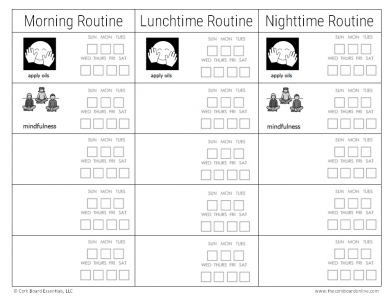
Starting new habits--even simple ones--can be hard, so I've created a free visual schedule that you can print out and hang up to help you get started.