Practice Mindfulness
There is an app for kids called Stop Breathe Think that will make meditation and mindfulness easy and fun for them. This will help them focus, learn to breathe, and even regulate their emotions.
One Thing at a Time
Break big tasks into smaller ones can help them focus because they won’t have to use brainpower to break the task into tinier ones. Like instead of saying, “Go to bed,” try, “Go get your toothbrush then come back,” or “Go put toothpaste on your brush then come back.” Things that take a shorter amount of time give your child less time to become unfocused or distracted.
Make it a Race
Be playful with them. Give them that dose of adrenalin to keep them focused. Try “See if you can get your shoes before I count to ten! Ready! Go!”
Be Okay with Reminders
This is probably the hardest one for us parents. Yes, we want them to be independent, but it’s not the end-all and be-all. They need to have something to help them stay focused. Try visual reminders like checklists on paper or pictures with velcro that they can move as they complete each task. You can move them from verbal reminders to non-verbal reminders. For instance, tap your forehead each time you remind them to focus and eventually just use the sign.
[bctt tweet=”Be okay with reminders with your kids who have trouble focusing.” username=”corkboardblog”]
Provide Proprioceptive Input
Proprioceptive refers to the sensory system that tells us how much pressure is being applied to our body. You can increase input with compression clothing, weighted vests or blankets, or “heavy” work.
Use Essential Oils
Essential oils are a powerful way to support the nervous system. Peppermint is known for increasing mental acuity and Lemon is the official oil of focus. Try diffusing them in the room where you do schoolwork or homework.
Supplements
There are a lot of these out there, but I am a big fan of fish oil for kids. You can also use Vitamin B12 or Magnesium which will give them clarity and energy. For other ways to supplement for ADHD, check Google or with your local naturopath.
Feed and Hydrate
We want our kids’ bodies to be at their absolute best when we’re asking them to focus. We want their body to have all the micronutrients, all the things they need to be successful. Make sure to take regular breaks to fuel them with food rich in protein, good fats, and help them stay hydrated.
Remove Distractions
Distractions come in any form. Provide them with accommodations like noise-canceling headphones or prepare a place in your house that is free from all visual distractions to help them focus.
Use Binaural Beats
The idea behind binaural beats is that you play two tones with slightly different frequencies into each ear (through headphones, ideally), and your brain perceives it as a single sound. Depending on the frequencies used, it’s said that this can change your mental state. Check your app store for free binaural beats apps.
Create Consistent Routines
We want to help our kids to create and rely on muscle memory for the routine things they need to do. While it may not matter if you brush your teeth or put your pajamas on first, create a structured bedtime routine that goes in the same order every night. Eventually, your child’s muscle memory will help them get all the bedtime tasks done with minimal cognitive effort.
Provide High Interest
When kids are interested in something, they are more likely to stay focused. I bet your child focuses more when playing a video game or playing a game with friends compared to the focus you get during math homework. Try to gamify mundane tasks to keep your child’s brain engaged.
What tips and tricks help your child focus?
]]>If you're anything like me, you get to the end of the day and feel like all you did was yell at kids. Most of the items on your to-do list remain unchecked. You wish you had more patience, and you wish you could focus enough to accomplish something. Anything.
I also have a child who is easily distracted and the definition of impulsive. I feel like I spend all day repeating, "Stop and think," "Focus!" "Stop! WHY WOULD YOU DO THAT?!?!"
As a parent coach, I can't stay in this state. Not that anyone would want to, but, for me, especially, it feels horribly hypocritical.

So is there a way to go from stressed and grumpy to peaceful and content? A way to go from frantic and harried to focused and productive?
I can't magically change your life, but I can suggest these 2 easy changes that are saving our life right now.
Easy Change #1
Give everyone Copaiba. Derived from the bark of a South American tree, Copaiba helps to calm and soothe the nervous system. It has a higher concentration of the chemical that makes CBD oil all the rage in a way that directly affects your brains receptors. CBD oil can only indirectly affect them. Additionally, Copaiba is a powerful antioxidant and supports many other systems of your body.
I prefer to take a drop under my tongue while Ty prefers I apply it topically to his skin. We're attempting to do this every 2 hours. I have to set an alarm on my phone.
Click here to schedule a quick appointment to find out how to get Copaiba for free in July.
Easy Change #2
Practice mindfulness. Just 10 minutes a day. This simple ritual alters our brains to respond, rather than react, and increases focus and cognition. There are some physical benefits, too. Seriously. What more could you want? (Don't answer that, since it can't cook or clean.)
So how does one practice mindfulness for 10 minutes a day? That's what I asked, too. I found a great app for me called Potential Project. For kids, we love Stop, Breathe & Think KIDS.
I prefer to get my 10 minutes knocked out in the morning. I'm trying to get Ty to do the app a couple times a day because it's something else I can use to keep him occupied.
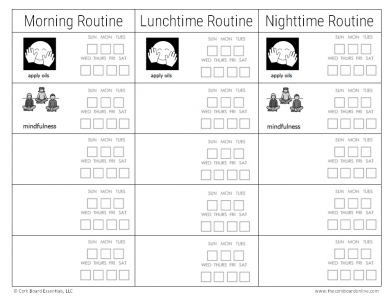
Starting new habits--even simple ones--can be hard, so I've created a free visual schedule that you can print out and hang up to help you get started.