Dr. Karyn Purvis coined the term “hard place.”
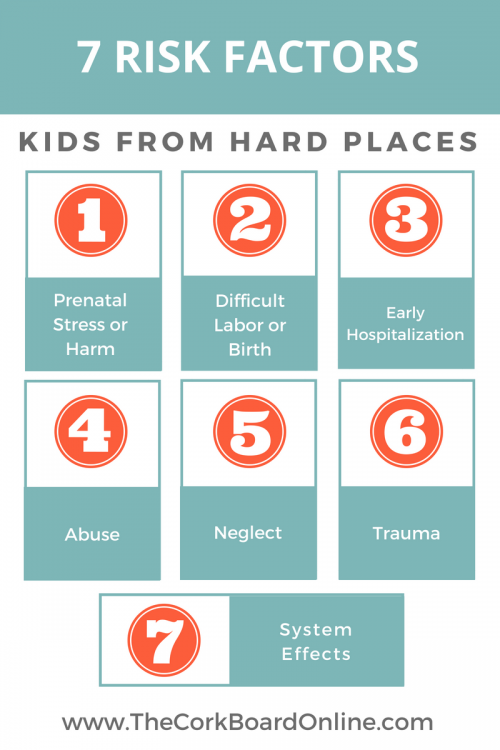
There are 7 Risk Factors that the Institute of Child Development recognizes:
-
Prenatal Stress or Harm
For children adopted at birth, it is likely that their pregnancy was not planned which automatically leads to a more stressful prenatal experience than most children. For children whose birth mother’s lived in places of extreme poverty, the stress of not knowing when the next meal was or where to sleep every night manifests as elevated cortisol levels. Even if your child is not adopted, many parents, when prompted, can recall an unusually high stress situation during pregnancy (extreme morning sickness, death in the family, contingent house buying or selling). Some research shows that stressful pregnancies can be linked to higher cortisol levels in children as long as 10 years later! (1)
-
Difficult Labor or Birth
Whether labor lasted for days on end or the cord was wrapped numerous times around baby’s neck causing oxygen deprivation or there was an emergency C-section, all of these cause surges of high cortisol levels in mama and consequently babies. (2)
-
Early Hospitalization
Infants with early medical issues and premature babies are often incubated or need care in a way that impacts the amount of physical touch they would normally receive. The decrease touch time (3) paired with the over-stimulation of their under-developed sensory system can have long-lasting impacts (4).
-
Abuse
There are many types of abuse including physical, emotional, spiritual, and sexual. Prenatal or early substance exposure also falls in this category (5).
-
Neglect
Neglect can happen for many reasons. A good mom doing her best who is just overtired and stressed or a mom who isn’t capable due to being under the influence substances. Children who grow up in institutions are often neglected. Neglect affects brain development in the same way, no matter what the reasons (6).
-
Trauma
Medical procedures, natural disasters, car wrecks, and tragedies are typical examples. In some ways, trauma is also in the eye of the beholder. Trauma is either a single event (or series of ongoing stressors) that renders a person feeling fearful and helpless.
-
System Effects
This could be any change in primary caregiver which automatically captures all children who have been adopted or fostered.
It’s important to note that prenatal stress, difficult birthing process, early medical trauma, and change of primary caregiver are often overlooked. Additionally, the first four risk factors can all apply to children even if they were adopted at birth (which is often misconceived as a lower risk adoption).
How many of the risk factors apply to your family?
]]>

Kathleen Guire is the founder of the Whole House Blog. She also recently released her first novel, Defining Home, meant to increase awareness about the tragedies of slavery and sex trafficking. She had wise words to share about FASD, self-publishing, and how she keeps her large family organized.
Related Links
Episode #2 with Bethany Kaczmarek on Abusive Relationships
Cool video on electronics sniffing dogs
YouTube channel on parenting kids from hard places
Create Space for self-publishing
Vellum (e-book formatting software)
Connect with Kathleen
Website | Podcast | Instagram | FB Page | Personal FB
]]>