Here are activities I found when we did Cycle 3 last time. The book list has been updated.
___________________________
History: Civil War
Both Week 11 and 12 are Civil War-related so enter a 2 week unit on the Civil War. During Week 11, we’ll be comparing the north and south–soldiers, culture, etc. Week 12 will be learning about key people in the Civil War.
Week 11:
- Check out Lesson 3 here.
- Confederacy Chart (South)
- Union Chart (North)
For younger kids, you can do a side-by-side visual collage and the older kids can do a written chart.
Week 12:
You can find a pretty extensive list of “important” Civil War folks here. I recommend checking out library books on the ones you want to study. We will make a log cabin paper quilt like the one explained here (pages 4 and 24) but with pictures and sentences of/about the people we study instead of events of Abe Lincoln’s life.
Other Activities:
- Music crossover
- Math crossover
- Gettysburg address
- Game (+)
- Reading comprehension (+)
- Map
- Adaptation of Uncle Tom’s Cabin
- Red Badge of Courage audio
- Printables
- Art crossover: study Matthew Brady and photography
- Activities chosen from Civil War project and activity books listed in the resources widget below.
Science: Endocrine System
Intro: Video
We’ll do selections from this lesson plan. If you need more explanation for the cabbage experiment, check here.
Science: Blood
We will just catch up on some of the Circulation stuff we didn’t get to in Week 8.
]]>
 . I love the simple instructions that also include pictures.
I let PJ page through the book and choose our first project. He loves being in the kitchen so he chose to make corn cakes (found on page 24). The recipe called for corn tortilla flour (which we didn’t have) or all purpose flour (which was out because we’re trying a gluten-free diet for Ty this summer) so we used fine corn meal. The only other ingredient was water in the original recipe.
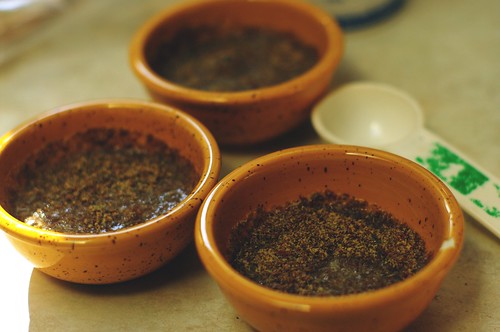
Normally the gluten in the flour would be enough to make the dough stick together but since we were just using corn meal, mixed a tablespoon of flax meal in 3 tablespoons of water to act as a binder.
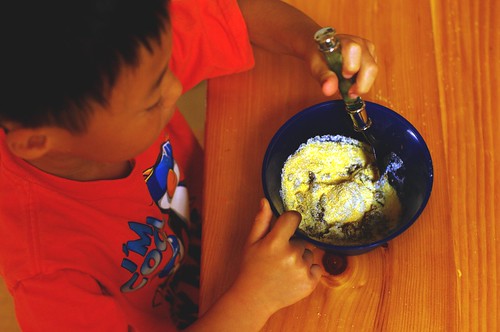
I gave each child about 1/4 cup of cornmeal is a bowl. I should have put a teaspoon of salt in too. Then I let them dump their flax meal water mixture in and stir.
We added more water or cornmeal as needed to make a dough.
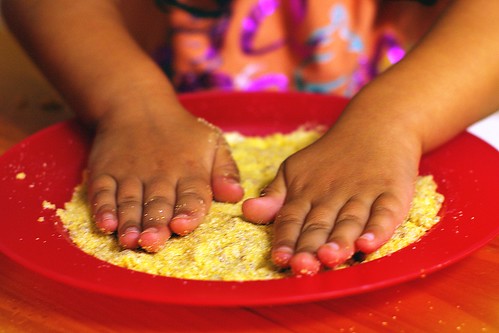
Then they flattened with their hands on a plate. Our “dough” more like wet sand than a typical dough. Flatter is better for cooking but much harder to get off the plate in one piece.
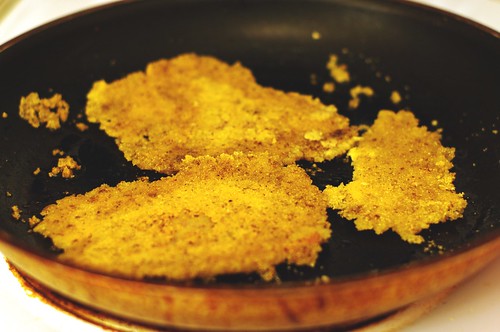
Next, we pan fried them in canola oil. They taste much better if you cook them until they are crispy all the way through like a thick chip.
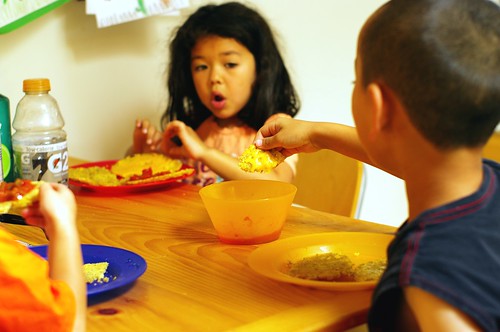
We melted cheese on some, tried one plain, and dipped some in salsa. They probably won’t make our meal rotation but it was a good learning experience for the kids and doubled as snack!
To see other books we used, click here.
To see the overview of the unit, click here.
]]>
If you missed the overview of this unit, click here.
]]>I’ll be covering the specifics of our hands-on projects in other posts, but wanted to document some of the resources we found particularly useful.
We started our unit by reading through the Powerpoint presentation found here. We have a laptop with PUSH2TV
I digress.
From there the kids moved into some age-appropriate activities:
Grade 3: A math exercise to demonstrate the ability to read a chart.
Grade 1: Native Americans-overview and Bison Activity.*
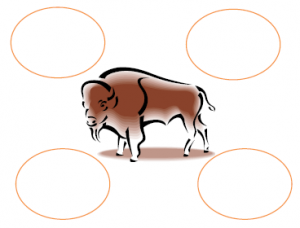 Preschool: Tee Pee Coloring Page. This isn’t the actual one we used, but close enough since I can’t find the one we used. The point was to talk about shapes found in the picture.
Everyone: We talked about how Native Americans used symbols to graphically tell stories. We looked at some examples. Then we used sidewalk chalk on our patio to create our own stories in symbols.
*Instructions: Have the student draw something for which the Native Americans used Bison (i.e., meat, clothing, tee pees, tools, and weapons).
We made up this song to help Mia remember:
sung to the tune of BINGO.
The Native Americans had an animal and BISON was his name-o.B-I-S-O-N, B-I-S-O-N, B-I-S-O-N, and BISON was his name-o.The animal roamed around the plains…<clap>-I-S-O-NThey hunted it to eat its meat…<clap>-<clap>-S-O-NThey used the fur to them warm…<clap>-<clap>-<clap>-O-NThey used the skin to make tee pees…<clap>-<clap>-<clap>-<clap>-NThey used the bones to make their tools…<clap>-<clap>-<clap>-<clap>-<clap>
Other sites I found helpful when planning activities were:
- http://www.theteachersguide.com/nativeamericans.html
- http://www.carnegiemnh.org/online/indians/about.html