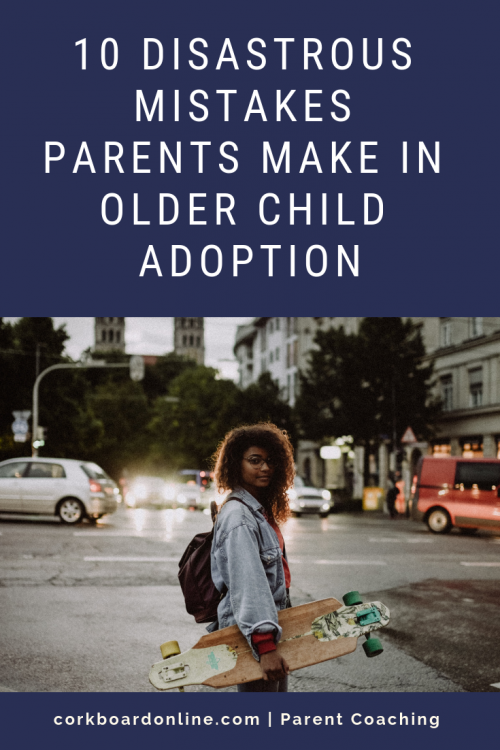
We had adopted before. We had therapeutic parent training. We love teenagers. Surely, we would rock at older child adoption.
Maybe you weren’t nearly as optimistic and naive as us, but chances are that there is a disconnect between your expectations and what you are experiencing.
Maybe you are prepping for an older child adoption, scouring the internet, and found this post. You’re wondering what you’re in for.
We learned many lessons the hard way at the expense of our relationship with our kids. Fortunately, there’s such a thing as second, third, and 503rd chances, so we’re getting to put what we learned into action.
Imagine if you didn’t have to learn trial-by-fire. Here are 10 of the mistakes we made that you should definitely not do in older child adoption.
[bctt tweet=”We learned many lessons the hard way at the expense of our relationship with our kids. #olderchildadoption #parenting” username=”corkboardblog”]
Do not dis your child’s country of origin or family…ever.
If you’re sarcastic like us, it’s easy to make a passing remark that was meant to be humorous but drives a deep wedge between us and our child. Additionally, not understanding a certain culture may make a situation seem ridiculous or illogical. However, keep your thoughts to yourself. Your child’s identity is currently wrapped up in these things. And older kids from trauma tend to not have great senses of humor.
Do not minimize an older adopted child’s felt discomfort.
We respected their boundaries pretty well for the first 3 months. Then the honeymoon ended and so did my patience. Instead of honoring the fact that eye contact felt weird or that hearing the words “I love you” (even between two other people) were like nails on a chalkboard, we verbalized how ridiculous they were acting. We probably should have tried “I wonder why ‘I love you’ makes you so uncomfortable?” (and been okay with a non-answer). We would say things like, “That’s unhealthy. What are you going to do when you get married?… Nope, you won’t find a husband that’s okay with never saying those words. No really. Not going to happen. Ever. And that’s why you’re still in therapy, since you asked yesterday.” Don’t say those things.
Do not build expectations based around age.
I wish we had established early on that we would make decisions and create expectations around currently exhibited skills. Now, I often say, “Your behavior is communicating to me that you don’t feel safe enough or able to <insert something like ‘make your own food decisions’ here>. Let me help you this time, and we’ll try again another time.” My tendency has been to frustratingly point out that kids their age should be able to follow a 2 step direction or copy a paragraph with minimal mistakes. We’ve also used words like “catch up” and “act like a big girl/boy” and “you SHOULD know that.” Bad ideas…even when your teenager showers with the shower curtain all.the.way open.
I actually did an entire post about the nasty word SHOULD. You can read it here.
Do not minimize the fears of your older child.
As a really pragmatic person, this is so hard for me. But a lot of older adopted children have irrational fears. You may understand that they are irrational, but they FEEL very real to your child. As much as you want to scream, “GET. OVER. IT!” Don’t. Because you might end up with a rage on your hands.
Do not push their buttons in return.
These kids are button-pushing geniuses. Apparently so am I. Take it from an expert…retaliation is counterproductive no matter how good it feels. Withholding those necessary “yesses” also not helpful. Please tell me I’m not the only one who struggles with joyful yesses.
If you’re not sure how you can give more yesses, you may need the Yes Game.
Do not assume anything.
The attitude-y body language drives me nuts just like the next mom, but when they totally deny it…ERRRG. I’ve actually come to the conclusion that they are usually completely clueless to how they come across. So all those redos and lectures about such behavior…totally lost and probably caused loads of relational damage since the accused parties honest-to-goodness think they are innocent. Sometimes the stories we are telling ourselves about what their behavior means are just that…stories.
I shared a powerful example of this in my parent support FB group recently. You can see the post here.
Older adopted kids do not understand sarcasm, logic, or idioms.
Our family’s love language is sarcasm. It’s weird because neither Patrick nor I grew up that way. Maybe it’s a generational thing. Either way, it gets lost in translation. Especially if your children do not use English as their first language. Even worse than not understanding, they will take what you say literally. Then they start telling themselves false stories about how you feel about them. Not good.
Do not argue with your child.
Whether they’re spewing verbal trash on your or just happen to say something ridiculous, underreact at all costs. It’s all nonsense meant to protect. I’ve wasted many words trying to convince them they were wrong or even going into battle against hurtful words. This often escalated us to both the hospital and police station. Don’t be us. Save your breath. Just stay calm and close. You can acknowledge that you heard her without agreeing or correcting.
Do not use consequences to correct behavior.
Taking away electronics for mouthiness is translated, “They didn’t really want me to have an <insert device here> anyway. <insert self-defeatism> They can have it.” At least that’s how it goes in my house. Kids that have been traumatized and/or grew up with nothing cannot be motivated by lost privileges. They just adapt and it further reinforces that no one will ever love them. Additionally, consequences can create a control battle that I promise you will lose every time. But not before it gets REALLY ugly. You need to understand what the behavior is communicating so you can address it from the root.
If you’re already doing these things, no worries. You’re at a crossroads, and it’s never too late to make a course adjustment. Also, give yourself grace. No one is perfect. But once you know better, strive to be better.
You’re a good mom, doing good work. You’re not alone!
To listen to The Adoption Connection podcasts on teens, click here.
This post was adapted from “What Not To Do in Older Child Adoption.”
]]>You may have left off on good terms or maybe you’re both hurt and angry.
We’ve actually had all of that happen with all the feels that go with it. No matter how or why you have a child not living at home, and no matter what the state of your relationship is, there is hope.
Even when our kids are not living under the same roof as us, we can still use connected parenting strategies.
[bctt tweet=”Even when our kids are not living under the same roof as us, we can still use connected #parenting strategies.” username=”corkboardblog”]
This is what is working for us right now.
Be Intentional.
This is especially important if you’re naturally task oriented instead of relationship oriented. But, either way, we’re all busy. You don’t want the ball you drop (even accidentally) to be the connection with your kids. If you have a child who never reaches out, it’s even easier to let the connection weaken. I literally have a recurring task on my to-do list app to connect with our kids who live away from home. For a couple, I send handwritten letters. Others get texts.
Enter Their World.
What are they doing? Could you go along for the ride? Maybe pop in for a visit at their workplace? Or show up at a pickup soccer game? I also feel like food is the universal truce language. If your child was adopted from an older age from another country, food experiences that reflect their culture of origin are a plus.
Nod and Pretend to Understand.
Whatever they tell you, just go with it. “Thanks for telling me” is a great neutral statement that allows you to respond in a non-critical way that also doesn’t mean you agree with whatever is going on. We can’t control them. We can’t keep them from learning the hard way. They need a safe place to land when they are learning a hard lesson. If you want to be that safe place, you’ll just have to swallow your pride, bite your tongue, and hold all questions and advice. If I can do this, so can you. I literally thought it was going to kill me, but here I am. And relationships are being restored.
Follow Their Lead.
One of our kids needs rhythmical, predictable connection, so she gets a letter weekly. I write on the same day each week, so she receives it at about the same time each week. Another is more “cool,” so a periodic, “What’s new?” works for him. And yet another has made it clear that she’d prefer to figure out life with minimal connection to us. Every interaction with her is prayerfully considered and only attempted if I’m in a position to not spiral if she hard-core rejects me again. So basically, I’m not dropping into her workplace for a “surprise” visit anytime…EVER.
Invite But Don’t Expect.
We always make a point to let the kids know that they are wanted, invited, and welcome to participate in family activities. However, they are free to decline without a guilt trip from us. At least that’s the theory. #iamhumanafterall This actually applies to our teens at home too. There are only a handful of things that I consider “mandatory,” and these are announced with much notice. Because we give so much freedom in the other things, the kids are very compliant with the 2 things a year that I really want them at. And, honestly, if they decided to not come, I wouldn’t fight it. (But don’t tell them that!)
Deal With Your Stuff.
Use this time that they’re not underfoot to deal with your emotional baggage. If the thought of having them under your roof again gives you hives or causes you to hyperventilate, that is a sign that you have stuff. I’m not saying you ever have to let them move back in, but being able to entertain the thought is a good barometer for how healthy you are in relation to them. Take it from a gal who knows. The hardest part of connected parenting is being emotionally available whenever our kids ARE ready to connect.
If you have kids out of the house, how are you staying connected?
]]>We’ve been there. In October 2015, we were at the peak of our crisis. I was mentally unstable and unpleasant to be around. One of our kids was so fragile that her behavior became unsafe for everyone. Two of our kids were looking for the quickest ticket out of our home.
Almost three years later, we’re in a much better space. Relationships that I had given up on are starting to come alive again. I’ve wrestled with my part in our crisis and worked hard to change. It feels like we’ve been given a re-do with our older kids.
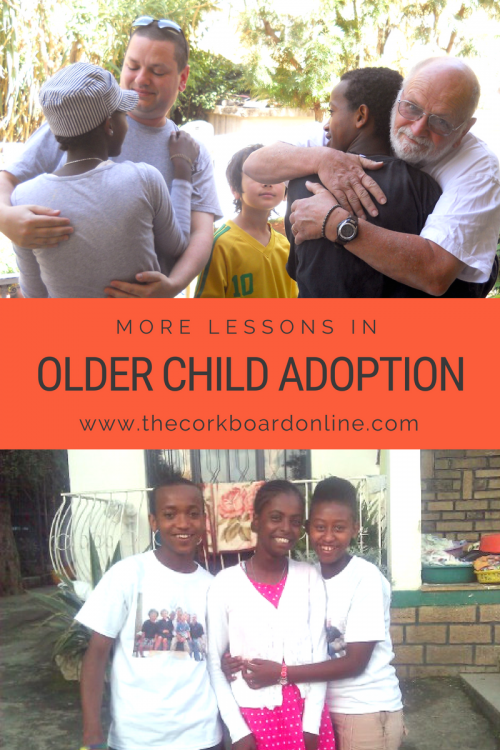
Here are some updated lessons.
it’s not over ’til it’s over
When our oldest kids left home without looking back, I felt like a failure. Three years of blood, sweat, and tears down the drain. Or so I thought. In reality, their journeys were just beginning. Even when all feels lost and hopeless, remember, that there’s always tomorrow. And the next tomorrow. And the next one. For us, it’s taken years’ worth of tomorrows. Take words like, “I’m finished with you. Good-bye,” with a grain of salt. It’s the trauma talking. Respond with, “I’ll still be here if you ever change your mind.” Then do whatever you need to do to lick and heal your wounds so that is true.
prayer is powerful
Part of my brain used to think that connected parenting would solve all things. I still believe in it with all my heart. And it saved our family. It is good people skills and will not screw things up like traditional parenting. But it doesn’t “fix” our kids or guarantee a relationship. Our kids’ hurts and fears run deep in places only God can touch or heal. Prayer has been how I’ve found peace in the crazy. I’ve found hope in the hurt. For my whole life, I’ve said I had faith and prayer works. Nothing has put that to the test like raising older adopted kids.
focus on relationship
After our kids left, our therapist asked me, “Do you still want a relationship with them?” “Of course,” I responded.
That answer gave me clarity about so many other things. At each interaction with my older kids, I would think about whether my response or reaction would bring them closer or push them away. Our therapist actually challenged me to not ask a single question for at least 6 months since questions always put them on the defensive. I still have scar marks on my tongue from that season. The crazy thing? The kids started to wander back to a relationship with us on their own. For a couple, it took months, others years.
your investment matters
I know it feels like what you are doing (or did) isn’t making a difference, but it is. Trust me. Patrick and I screwed up a relationship over 15 years ago with a young man who we tried to help. That was years before we knew anything about trauma or connected anything. It took ten years, but he did come back looking for us. He was thankful for the time spent with us even though it had ended poorly. We’ve been back in touch ever since. Trust that you’re sowing seeds that may take years to sprout.
find your tribe
Ok, a tribe may be much, but contact with at least ONE person who understands or has walked through this will bring about an incredible amount of sanity. You are NOT crazy. You are also NOT alone. There is hope. If you have no one, then count me in. Click here to grab a virtual coffee. No sales pitch. No commitment. No unsolicited advice. Just an understanding ear.
[bctt tweet=”If you’re struggling with older child #adoption, there is hope!” username=”corkboardonline”]
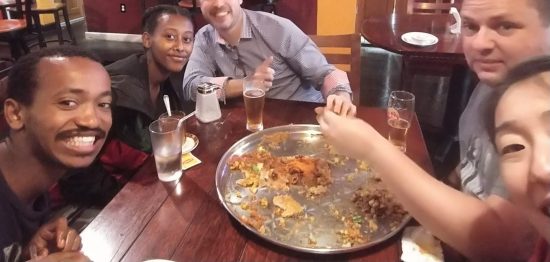
This picture is proof that miracles still happen.
One of my most read posts ever is Older Child Adoption | What I Would Have Done Differently. Click here to read it.
]]>
Lisa Qualls is the founder of the One Thankful Mom blog. She is a writer and speaker with the unusual chance to have experienced all 3 parts of the adoption triad–birth mom, adoptive mom, and foster child. We’ve connected over so many similarities over the years but she’s far more gracious, wise, and compassionate than me. I know you’ll love what she has to share. We chatted about a part of her story that she hasn’t talked much about…her story as a birth mom. Plus the after effects that having a household of kids can have on even a natural extrovert and my favorite topic of the Enneagram also slipped in. I promise you. I didn’t even prime her!
Here are links to all the places where Lisa is hanging out:
Blog | FB Page | Instagram | Twitter | YouTube
Other things we referenced:
Michael Hyatt – front and back stage days
A podcast that includes Enneagram Subtype descriptions
My Essentially Connected Parenting YouTube Channel

 This week Monica and I chat about the things that blindsided us when we adopted, the hardest thing our marriages have survived, and how her local school system is failing her daughter right now.
Connect with Monica on her blog, Instagram, or check out her new podcast–Collared Chicks.
If you want to check out that book on older child adoption I mentioned, click here.
If you still need to shop for the holidays, check out the Gift Guide.
]]>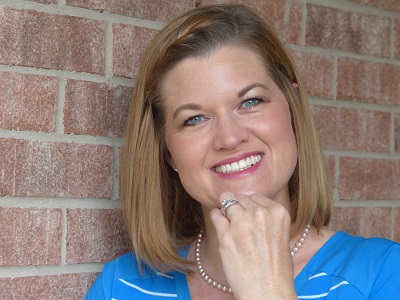
As promised, here is the second part* of my conversation with Dr. Kris Kittle on her upcoming book on older child adoption. We chat about how her daughter is doing, love languages, and her thoughts on her next project.
*If you missed last week, check that out first by clicking here.
If you need a starting point for finding a trusted mental health professional (therapist, counselor, etc.) for your family, this blog post is a great resource for what to look for.
During the show, both of us mention how our passion is making connections with other families, specifically adoptive moms. You can find Kris at her Facebook page and me on my FB parent support group called Essentially Connected Parenting. I’m also on Instagram and Twitter.
The website and budding community for the book is at www.adoptionsurvival.com.
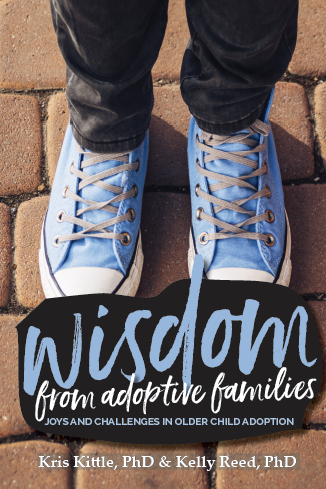
I’m so excited to welcome Dr. Kris Kittle to the show this week. After adopting an older child (age 13), she realized there were no comprehensive, practical books to guide families who had brought home kids older than 10. So what did she do? Gather up a research partners and 40+ adoptive families and wrote that book! It’s not quite available yet, but here’s the cover! Isn’t it great? This week is the first part of our conversation. Click here for Part 2.
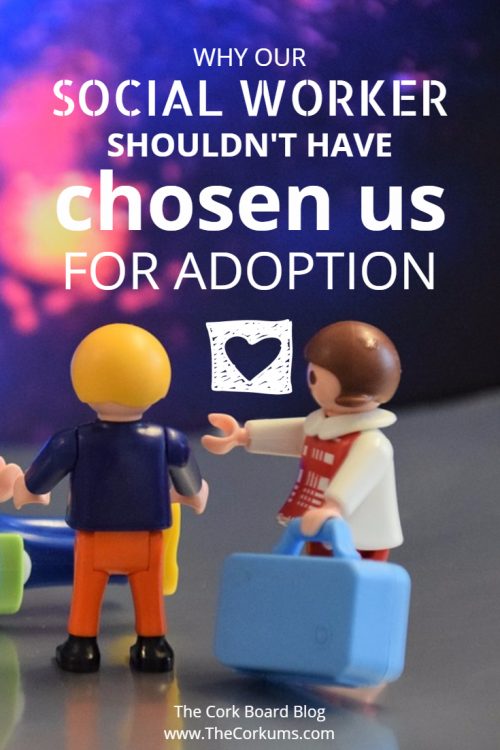
If you had asked me a decade ago what would make an ideal adoptive family, I would’ve responded something about a family who had open hearts and was willing. I thought love was all you needed.
Five years ago, I would’ve told you that you also needed to understand trauma, want Dr. Purvis to live in your home, and have a strong support system.
As I reflect on our family and the other families I chat with, I’ve been thinking more about what agencies should be doing to mitigate post-placement crisis.
One thing that I keep landing on is that they should be waaay more picky about who is allowed to bring a child from a hard place into their home.
Honestly, they shouldn’t have picked us.
We don’t do simple.
We don’t have a couple tomatoes and peppers in pots. We have a 500 square foot garden which doesn’t include the grapes, berries, or fruit trees.
I don’t buy boxed homeschool curriculum. I write it and start communities.
We don’t read books and watch videos. We go half way across the country to become trainers.
None of those things are inherently bad, but they mean that we rarely have margin. We’re always filling it with new escapades and experiments. Think constant motion.
Because we’re adventurers, we suck at routine. We rarely do the same thing week to week or day to day. There’s usually some idea to chase that might get in the way of remembering to do laundry or eat…let alone cook a meal.
Lastly, I’m an intense person. I’m high energy, high strung, and my voice tends more toward army sergeant than caring preschool teacher.
Looking back, we were probably a train wreck waiting to happen.
Kids from hard places need
- Calm people. Our kids’ brains are so quick to fight/flight/freeze, that they need external regulators. Because they are in their amygdala, they need non-verbal calmness and aura which can reach that primal brain. Words and logic are useless most of the time. Some people just radiate calmness and peace more than others. Whatever I radiate, freaks my kids out.
- Uncluttered spaces. Besides people, our kids also regulate off of their environment. Simple and organized spaces invite calm while clutter invites chaos. We could all probably use less visual clutter, but it’s imperative for kids from hard places. Also, less clutter means less stuff to manage which is also a plus. Of course, just because they need it, doesn’t mean that they will help you get there or help you keep it that way.
- Predictability. It takes a lot of mental bandwidth to wonder what’s next all the time…bandwidth kids from hard places don’t have. I can’t even run the same route twice while training for a triathlon let alone do the same things every. single. day.
- Margin. Just like they need uncluttered environments with lots of white space, our kids need margin in their schedules. They need time to decompress. If thinking about watching a teen sit and stare at a wall for hours makes you twitchy, you probably shouldn’t adopt older kids. Oh wait, that might just be me.
If you’re parenting kids from hard places, what would you add that you may not have thought of before you were in the trenches.
]]>
I’m currently in a mental battle that has been going on for the better part of a year.
“How unconditional should love really be?”
Or maybe the better question, “Does unconditional love equal unconditional relationship on the other person’s terms?”
I’m hoping not.
What if that person is a child of yours? Still hoping not.
For now, I’m going to start writing weekly letters. It’s something that I’m already doing with another one of the kids and Jay (the aged out foster youth who we tried to help but ended up in jail).
Letters feels safest. Ok, safest would actually be forgetting the relationship ever existed.
[bctt tweet=”safest would be forgetting the relationship ever existed, but…#olderchildadoption #adoptionishard” username=”corkboardblog”]
But letter writing feels safest while still believing that God has my back and will redeem this relationship in His time. They allow me to connect in a consistent, rhythmical way that protects me from an altered reality that’s meant to, in a reactive attachment kind of way, harm the mother figure in her life.
I know that what “feels” isn’t always the best way to make a decision, but I’m so bruised and tattered by this journey of loving people from hurt places. Hence the mental battle. Raw honesty? I need to pray more about it.
But I’m also hurt which is pairing up with my human need to be right…which of course I am 
Here’s to more prayer and more faith. In the meantime, I’ll add another person to my weekly letter writing ritual.
]]>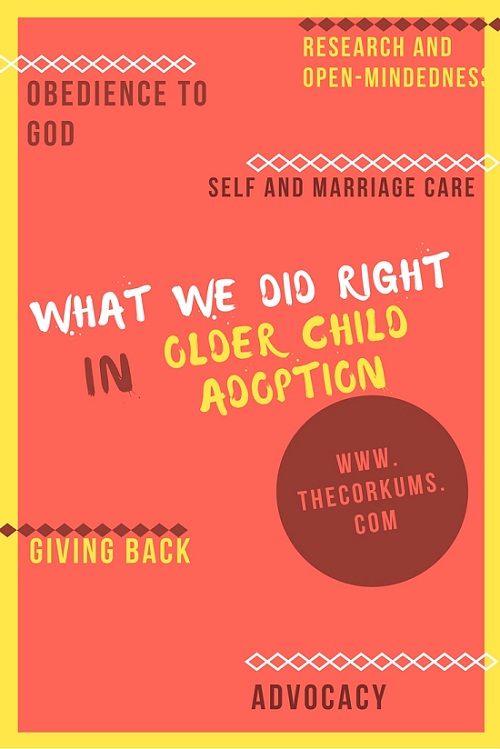
- We did our best to be obedient to God. Not just in our decision to actually adopt, but in how we thought He was leading us once we were neck deep. We continue to learn invaluable lessons about faith and obedience as our journey in this life (and even with our kids) is far from over.
- We didn’t lose ourselves or our marriage. By the grace of God, we were able to not let our crisis completely define us. We still managed to start new hobbies, open a coffee shop, start a wellness business, and find time for ourselves and our marriage. While the past three years have strained our relationship in ways we haven’t experienced since the broken leg era (ask me about that story sometime if you don’t haven’t known us that long), we have fought to be on the same side…and, yes, sometimes it took fighting. We have also done our best at letting each other do things in the area of self-care without begrudgingness or resentfulness (Patrick does this last part way better than me).
- We persevered, researched, and kept an open mind. Patrick and I are both researchers by nature. We’re also pretty stubborn…one of my friends used the word, “tireless.” While we definitely don’t feel tireless…more like battle-weary and scarred…we have spent countless hours reading, listening, conversing, networking, and attending trainings about adoption, attachment, trauma, special education, and alternative therapies in an attempt to do what’s best for our kids. While we can both be pretty opinionated, we’ve tried to keep an open mind and have learned a lot along the way. Maybe one day I’ll do a post about paradigm shifts we’ve made over the past 15 years.
- We gave back. To me, the most obvious redemptive aspect of our journey was that it’s given us a platform to help other struggling families. If what we have learned from our experiences and research (good, bad, and ugly), helped us help just one other family, it was worth it. I’ve also found that when I’m just about to be swallowed up by my own self-pity, the only way to keep my head above water is to reach out and help someone else. Getting to know the stories of other families (some even more nightmare-ish than ours), keeps us on our knees and gives us perspective.
- We advocated. Whether it be for our family or for other families, we have done everything we know to do to raise awareness for and about post-placement families. In a lot of ways, this part of the journey is still new and developing. If nothing else, this journey has obliterated a lot of my inhibitions which allows me to speak up unabashedly for our family and others and to confront those who I think can make a difference. It’s amazing what desperation will do to your filter and fears.
If you want to read the sweet comments my friends contributed to this post, click here.