This week I invited my husband, Patrick, to share the mic with me. We sat down to chat about our church journeys, misnomers about the Catholic faith, and why we’re pursuing a smaller, organic church community. Thanks for those of you who asked questions via FB before we recorded. Also, he gets the prize for the best life hack answer ever 
Links* to things we mentioned:
- Pals Socks (use coupon code SAS20 for 20% off )
- Joint Declaration on the Doctrine of Justification (Actual Text | Wikipedia Summary)
- Reimagining Church: Pursuing the Dream of Organic Christianity by Frank Viola
- Radical (the book we mentioned by David Platt)
- We Are Church (The thing that Francis Chan is doing)
*some links are affiliate links

So, Patrick has been relatively vague in my blog posts until now (so says Melissa), but we wish to be a bit more straightforward here. So, there are many things that we wish to question regarding the way we do Christianity, in particular, how we do “church.” There are many good aspects to the way we do church, and we don’t want to discount those, but we want to focus here on several of the things that we struggle with (each of these topics could be a book, so please excuse the brevity).
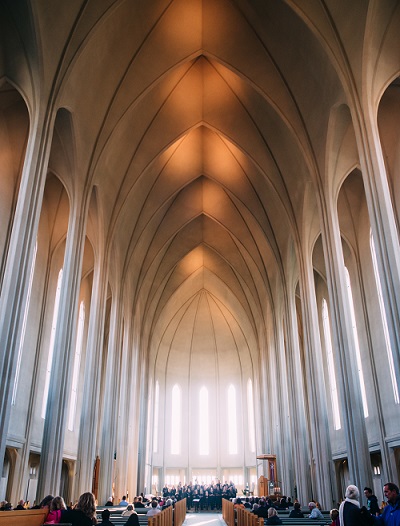
- The building – We love church building architecture. Unfortunately, we find it quite unnecessary. In the United States, there are billions upon billions of dollars’ worth of church real-estate. Do we really need this? Could we use our resources differently? Could we find a way of making church work without this? Having gatherings so consistently in one location whose main purpose is to host such gatherings really seems to imply it’s more about the location than the people.
- The service – The name alone implies that a service is being performed. Are we performing a service to God? That’s not generally how Sunday mornings are perceived. How about our language in, we “attend” service? What about participation? Why are we limited to singing a few songs? We know churches differ vastly in this regards, but we am focusing on the majority here, where generally, we can consider Sunday morning service as a performance, where we go and get entertained and educated. Aren’t all believers priests? And since when was worship always singing and preaching?
- The clergy/laity divide – We feel quite bad for pastors and priests. They have a tough life, being scrutinized for everything they say, do, or don’t say or don’t do. The divide has created a gap where one has to be “called” to live a holy life, and the laity can pawn off their spirituality on the religious professionals. Spiritual growth for the masses becomes the responsibility of the clergy. A church with a pastor follows the pastor. What if there was a church, where there was no pastor, and they followed Christ and where each believer’s access to the Holy Spirit was acknowledged?
- The focus – Churches have different focuses. Some churches focus on learning, some on ritual, some on the “moving of the Spirit,” some on fellowship, some on missions and outreach, some on evangelism, etc… Where is the balance? What if we focused on Christ and focused on the things that He was focused on? We all have our cannon within the cannon (where we pick our favorite parts and create a theology around those parts), but we would do well to recognize that and seek to create balance.
We have other things that we think that we need to question, but this post will get too long, and you probably wouldn’t read it. We’re probably already pushing our luck. Besides, we really don’t want to be about what is wrong, we really want to be about what is right. And what is right? That, friends, is for another post.
For those of you local to us, you’re invited to continue the conversation in person on Sundays at 2PM.
]]>One of my kids asked me a question the other day where I had to explain ethics. This was quite the arduous task, especially given the language barrier. Regardless, I chose my favorite ethics paradigm, virtue ethics, and attempted to explain the 7 virtues: Prudence, Justice, Temperance, Fortitude, Faith, Hope, and Love (the last three are the theological virtues). I was greeted by constant blank staring.
So, maybe I wasn’t being so prudent.
It got me to thinking, though–a good place to start asking questions about anything is temperance (the idea of finding the middle or the mean).
For instance, should we all practice Christianity alone as individuals? No.
Should all Christians in the world gather in one place to worship all at the same time? No.
The answer lies somewhere in the middle.
In my exploration of ideas, I find that many people that I talk to think that I am talking about extremes. So, when I say that we should be a tight-knit community, people think that I am suggesting that we never have alone time. Or, when I suggest that we should reconsider always splitting up by demographics (i.e. women go here, men go there, and children somewhere else, and oh… college kids go there and high-schoolers over there), people think that I am saying that we should never separate by demographic.
When we start to question things, we need to be cautious and be wary of extremes. Extremes are attractive, and people are drawn to them. Middle ground is not as “cool”, but it is probably more where we should find ourselves in most cases.
]]>Melissa:
Disclaimer: This one’s corny and rambling 
Patrick:
So, as I was driving home today, I kept having the thought of Christ and the Church running through my head. I was listening to my David Crowder station on Pandora, realizing again how individualistic the vast majority of Christian music is. So, my brain wandered, which is dangerous when I am driving. What if music reflected more of the idea of what the Church is? We would have lyrics like “here comes the bride”, or “body in motion”, or “people of the way”. (Note that you will not be hearing any music that I write on the radio any time too soon.) Dietrich Bonhoeffer suggested that Christ is the Church living in community. That is a rather powerful statement, but what if we really thought about the intimate nature of Christ and the Church in that way? Do we see our relationship with Christ as a community thing? How are we acting as the body? The bride? Those metaphors have meaning and we have lost the meaning somewhere along the way. We need to explore them again.

Scripture gives us a picture of Christ and the Church. For instance, Acts of the Apostles is all about how the Church mirrored/imitated/acted as/carried on the work of/was/complemented/(pick some other verb) Christ. Our modern day American glasses, however, have distorted the picture.
Would you be willing to join us in taking off those “Son-glasses” so that we can explore Him more and let Him lead the way? (sorry if that was corny… it just kinda happened)
Side-note: Melissa wanted me to change it to “put on son-glasses,” but I refused since we all know that sunglasses block out the sun, and in-turn, Son-glasses must therefore block out the Son, and putting those on wouldn’t be such a great idea. However, I do recognize that there are 3D glasses, which allow you to see 3D, but the parallelism isn’t as strong.
Patrick here, again.
When I think of the times throughout my life where I experienced Christ, those experiences may surprise others.
I remember Brother Bob doing a talent show skit as Elvis, popping out of a coffin singing blue suede shoes.
I think of pot-luck dinners.
I think of when we hosted the Polks at our house while they sought Missionary support in Baltimore.
I remember playing soccer with kids at an orphanage in Ethiopia.
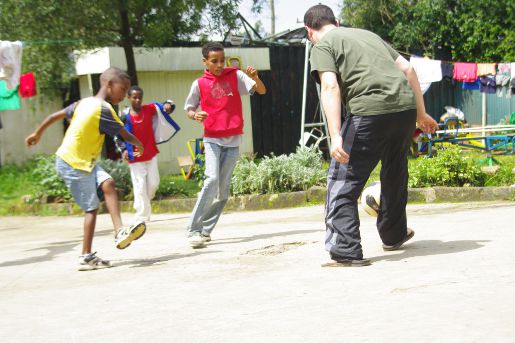
What seems to be the common thread is other people. This seems strange to me, being introverted and all, but it is true. There is something very powerful in that communal experience that I so deeply value. How can someone like me, who has anxiety over experiences with people that I do not know, find such joy and peace in such experiences? I can only come to one conclusion: Christ.
In what situations have you most strongly experienced Christ?
]]>

Years ago, there was a professor at a local university who started a Bible study. Quite a few zealous college students started attending. Before long, they had formed a tight-knit community as they sought out God individually and corporately. I won’t lie, the next part is a little weird when I say it out loud, but they all started living together on a farm. Yes, the word “commune” comes to mind. Eventually they started marrying (mostly to each other) and having kids.
I was one of the kids.
By the time I came along, the group had formalized into a small, non-denominational church. I use the word “church” loosely. While we met on Sundays to sing and listen to a sermon, the service was more informal than most I’ve attended since, and we spent a good part of our existence without a single paid staff person. Instead, there was a group of teaching elders who shared the responsibilities of shepherding, teaching, and discipleship. Additionally, we were all like one, big family, and I loved it. There was never a rush to get back out the door on a Sunday morning, and it was not unusual for kids to go home with a different family to spend the day with friends. I still get the warm fuzzies when I think about that chapter of my growing up years.
Eventually God called all of us away to new adventures and the routine meetings ended. However, my parents still consider the people from this season of our lives close friends. There are even connections within my generation that are still going strong.
I never felt as lost as I did in the years after changing church communities for the first time. Looking back, all the proceeding institutional churches I was a part of never felt like home. Whenever I would communicate what I desired in terms of community, I heard people tell me that didn’t exist. However, I knew it could. My heart longed and still longs for it.
Patrick’s not really hijacking the blog. We’re in this together, and we’d love for you to join us.
What has your experience with “church” been like?
So, if you know me, you know that I grew up as part of a Catholic family. I deeply value this background now that I am older, but when I was younger, I really struggled. Somewhere around the age of 14, I began to struggle with going to church. My parents, I think, saw this as me not liking religion and trying to escape, or even rebellion. In fact, I really struggled with the fact that I believed in Christ, but could not reconcile my experience of Him—show up to church, sit, stand, kneel, recite, repeat– to what I believed. I was so conflicted because I felt that the thing that I didn’t enjoy, didn’t understand, and couldn’t love was a requirement to what I believed. I hated this, and tried to reject Christianity, but couldn’t, no matter how I tried. When I found others that seemed to truly experience Christ in ways other than those that I was familiar with, I became intrigued. I have spent the last 15 years exploring those ways, but I have come up dry just like when I was 14. There is little difference in the Protestant way of Christianity and the Catholic way of Christianity. Alas, I am left with a desire that has gnawed at me for a long time, yet I have no resolution. So, after a long journey of study (which includes an M.A. in Theology) and years of exploration in Catholic and Protestant religious practice, I am ready to put aside my fears of what others think and put new thought to who Christ and His body are. In the coming days, I will be hijacking my wife’s blog to explore a little.
Will you join me?
click here for the entire series.