[bctt tweet=”Sometimes anxiety in kids comes out in behaviors that may look disrespectful without a closer look.” username=”corkboardblog”]
Have you ever had a child giggle or laugh hysterically while you were trying to be stern? Makes your blood boil, right?
Maybe your child never stops moving. If he’s not running around the room, he’s drumming, tapping, or humming.
Have you ever seen a child get super silly or use a silly or high-pitched voice?
What about the kid who asks incessant questions? Or never shuts up.
Do you have a child who seems like a hypochondriac? Unending stomaches and headaches?
Maybe it’s a “bad” habit like biting her nails or sucking his thumb?
All of these behaviors, and more, are ways that anxiety builds up in our kids and then leaks out.
Once we recognize our child’s anxiety, we can be proactive about giving appropriate ways to relieve the build-up of anxiety. Think of these things as releasing a little anxiety at a time like the valve on your pressure cooker so that they don’t blow up!
Warm Water
Baths or showers can be very calming. For a while, we scheduled hour-long “therapy baths” into our son’s schedule that served as a respite for us (he was 6 so able to play without constant, direct supervision) and a calming tool for him–WIN! WIN! We use Epsom salt and essential oils, but they’re not necessary. If you have access to a therapy pool, all the better. Sometimes swimming (even if the water isn’t warm) does the trick, too.
Extended Exhales
This is one of the easiest ways to regulate excitatory neurotransmitters…no equipment needed. Some kids need help learning how to make their body do this. If you’re using the bath as a tool, try blowing bubbles in the bathtub or with a straw into a cup of water. Challenge your child to see how long he can blow without taking a breath. If we’re out and about, I’ll often try to get our son to try to blow me as far away from him as possible with one breath.
Essential Oils
Scents are the quickest way to impact the Limbic System in the brain. “Essential oils in the floral category are typically composed of monoterpene alcohols, which hold calming properties. Tree, herb, and grass oils are known to promote grounding, soothing emotions and feelings of renewal, as they primarily include sesquiterpenes, esters, and oxides.” [2] Keep a calming blend on hand for quick sniffs throughout the day and as needed. For more on using essential oils to calm anxious feelings, click here.
Nutrition
The majority of serotonin (the happy chemical) is produced in the gut. The gut also has more nerve cells than your spinal cord and sends more messages to the brain than it receives. What we eat matters when it comes to mood stability. Rather than jump on a bandwagon, start with a food journal. Document what goes in food-wise, and what comes out behaviorally. Try eliminating foods with artificial anything or try a week with just whole, unprocessed foods. Many individuals with trauma have compromised digestive systems which is why our kids may be more sensitive to foods and nutrition.
Exercise
We could all probably benefit from the serotonin released during exercise. Whether your child shows signs of depression or hyperactivity, exercise is the universal “fix.” If your child suffers from sensory issues, exercise can have a double benefit. Keep track of which types of movement seem to excite versus calm your child and use them appropriately.
Rather than seeing these as quick-fixes, remember they are the most effective if you incorporate them frequently in your routine. If your child is really struggling, you may want to break for some of these as often as every 2 hours.
Do you have a simple way that you use to decrease anxiety in your family?
References
[1] https://en.oxforddictionaries.com/definition/anxiety
[2] https://media.doterra.com/us/en/brochures/emotional-aromatherapy.pdf
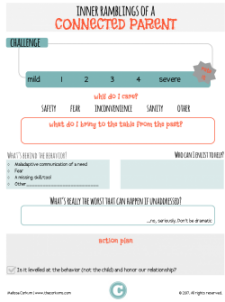
]]>A lot of moms (myself included) start to see their child as the adversary when bad behavior persists. One of the most helpful visuals that I learned when becoming a parent trainer was to stay on the same side as your child. Instead of imagining you against your child and his aggression, think about you and your child fighting the aggression together. It's a subtle, but powerful shift. It allowed me to keep some semblance of compassion toward my child instead of feeding the resentment monster.
"We need a common enemy to unite us." ~Condoleezza Rice
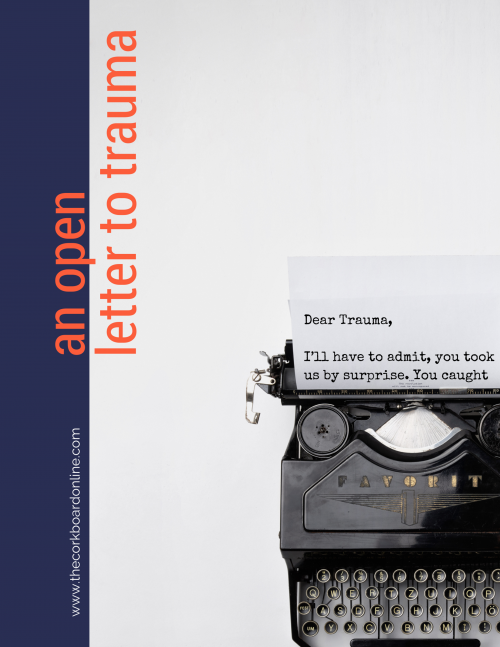
Here's a letter I penned to trauma (our family's common enemy) a while ago. It has a lot of great reminders that I still need.
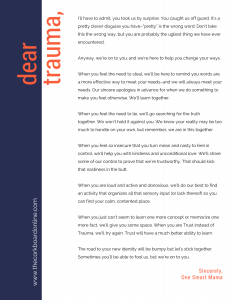
Dear Trauma,
I’ll have to admit, you took us by surprise. You caught us off guard. It’s a pretty clever disguise you have–”pretty” is the wrong word. Don’t take this the wrong way, but you are probably the ugliest thing we have ever encountered.
Anyway, we’re on to you, and we’re here to help you change your ways.
When you feel the need to steal, we’ll be here to remind you words are a more effective way to meet your needs–and we will always meet your needs. Our sincere apologies in advance for when we do something to make you feel otherwise. We’ll learn together.
When you feel the need to lie, we’ll go searching for the truth together. We won’t hold it against you. We know your reality may be too much to handle on your own, but remember, we are in this together.
When you feel so insecure that you turn mean and nasty to feel in control, we’ll help you with kindness and unconditional love. We’ll share some of our control to prove that we’re trustworthy. That should kick that nastiness in the butt.
When you are loud and active and obnoxious, we’ll do our best to find an activity that organizes all that sensory input (or lack thereof) so you can find your calm, contented place.
When you just can’t seem to learn one more concept or memorize one more fact, we’ll give you some space. When you are Trust instead of Trauma, we’ll try again. Trust will have a much better ability to learn.
The road to your new identity will be bumpy but let’s stick together. Sometimes you’ll be able to fool us, but we're on to you.
Sincerely,
One Smart Mama
[bctt tweet="Helpful #parenting tip: Stay on the same side as your child. Go after a common enemy together. #momhack" username="corkboardonline"]
It's so easy to forget this simple concept of staying on the same side as your child. Grab a printable copy for your fridge, bathroom mirror, and as a reference for your tatoo artist when he puts it on your forehead.
Dr. Karyn Purvis coined the term “hard place.”
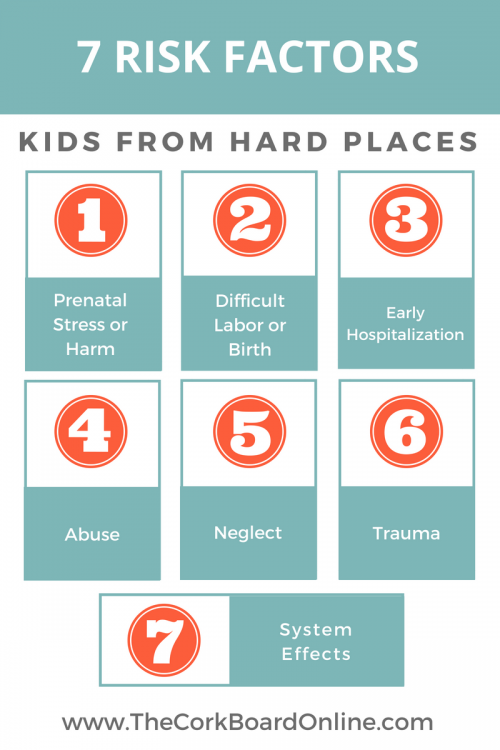
There are 7 Risk Factors that the Institute of Child Development recognizes:
-
Prenatal Stress or Harm
For children adopted at birth, it is likely that their pregnancy was not planned which automatically leads to a more stressful prenatal experience than most children. For children whose birth mother’s lived in places of extreme poverty, the stress of not knowing when the next meal was or where to sleep every night manifests as elevated cortisol levels. Even if your child is not adopted, many parents, when prompted, can recall an unusually high stress situation during pregnancy (extreme morning sickness, death in the family, contingent house buying or selling). Some research shows that stressful pregnancies can be linked to higher cortisol levels in children as long as 10 years later! (1)
-
Difficult Labor or Birth
Whether labor lasted for days on end or the cord was wrapped numerous times around baby’s neck causing oxygen deprivation or there was an emergency C-section, all of these cause surges of high cortisol levels in mama and consequently babies. (2)
-
Early Hospitalization
Infants with early medical issues and premature babies are often incubated or need care in a way that impacts the amount of physical touch they would normally receive. The decrease touch time (3) paired with the over-stimulation of their under-developed sensory system can have long-lasting impacts (4).
-
Abuse
There are many types of abuse including physical, emotional, spiritual, and sexual. Prenatal or early substance exposure also falls in this category (5).
-
Neglect
Neglect can happen for many reasons. A good mom doing her best who is just overtired and stressed or a mom who isn’t capable due to being under the influence substances. Children who grow up in institutions are often neglected. Neglect affects brain development in the same way, no matter what the reasons (6).
-
Trauma
Medical procedures, natural disasters, car wrecks, and tragedies are typical examples. In some ways, trauma is also in the eye of the beholder. Trauma is either a single event (or series of ongoing stressors) that renders a person feeling fearful and helpless.
-
System Effects
This could be any change in primary caregiver which automatically captures all children who have been adopted or fostered.
It’s important to note that prenatal stress, difficult birthing process, early medical trauma, and change of primary caregiver are often overlooked. Additionally, the first four risk factors can all apply to children even if they were adopted at birth (which is often misconceived as a lower risk adoption).
How many of the risk factors apply to your family?
]]>

What is hard about parenting a child who doesn’t meet an expectation? Have you ever heard yourself saying these phrases as a parent?
“But he SHOULD be able to do that.”
“He SHOULD remember after 500 reminders.”
Or
“I SHOULDN’T have to do that for him.”
“I SHOULDN’T have to live that way.”
Me. Me. Me…
Do you want to know the sucky thing? Despite all my feelings of what I think our son SHOULD do, he can’t. And despite the unfairness of how I SHOULDN’T be living, it’s just what needs to be done. Besides, do you know what I tell my kids ALL. THE. TIME?
“Life isn’t fair!”
About 3 years ago a practitioner introduced me to the phrase, “Radical Acceptance.” I’m still not sure how she meant for me to apply it, but I took each word literally and started taking stock of where we were as a family–including all the needs of our kids–and radically accepting and making peace with our HERE and NOW. It was almost a form of mindfulness. Through a lot of prayer and introspection and some visits to our awesome therapist, I was able to find a supernatural peace in the midst of the crazy. Well, at least sometimes. I’m not going to lie and tell you I have this figured out all the time. Because I don’t. But the crazy thing is that whenever I stop fighting against my reality, I’m calmer which makes my kids calmer which means they operate at the top of their ability set–whatever that happens to be. You know, at the end of the day, we can only control ourselves, not our situations, not our kids behaviors, not even how our kids react or respond to us.
[bctt tweet=”Whenever I stop fighting against my reality, I’m calmer. #parenthack” username=”macorkum”]
So here’s our challenge, instead of hyper zoning in on all the deficits that are annoyingly rearing their ugly heads, let’s focus on shedding all of our SHOULD statements. I know. SHOULD has 6-Letters. But you get the picture. This challenge is for me too because it’s a daily…no hourly struggle…to stay in this space of radical acceptance.
Will you try it for a week with me?
Comment below if you’re with me so we can all keep each other accountable.
]]>Our list of “things” (outside of the basic principles of trust-based parenting) has included diet, mindfulness, massage, oils, supplements, and medication.
Do you want to know the problem with using essential oils for challenging kids?
Just because you want them to work so bad, they will want NOTHING to do with them.
Do you want to know the secret about kids from hard places?
Their needs are complex and there’s no magic fix.
Tatoo it to your forehead. “There’s NO MAGIC FIX.”
Just because you want to try it, they will probably dig their feet in and hate it. Just because. And honestly, getting into a control battle with a kid to do something…even if it’s their magic fix…automatically makes it NOT the magic fix.
[bctt tweet=”There’s NO MAGIC FIX. #remindersformyself #parenting” username=”macorkum”]
P.S. I’m preaching this to myself because I’m the control queen and the queen of burning relationship bridges with my kids because I am trying to force a fix. Learn from my mistakes. Don’t be me.
However, despite the fact that oils weren’t the magic fix I was looking for, they were a magic fix for somebody else…me.
When I’d be chasing the kids around with a balancing blend, I realized, I wanted to smell it. I could feel the oils calming me down and helping me to access my other coping tools.
BONUS: Click HERE for an entire e-book on the science behind why oils work to manage our emotions. It’s really NOT all in your head…or is it?
I’ve said it before, and it’s worth saying again. “I cannot change my child, but I can change me…”
[bctt tweet=”I cannot change my child, but I can change me… #adoption” username=”macorkum”]
We can only control ourselves.
And while that seems anti-climactic, research on mirror neurons tell us that if we’re calm, our kids can calm by mirroring the calm in us.
What would happen if we had more tools as tired mamas to energize us, calm us, and literally manage our emotions from the inside out?
- Less frustration.
- More organization.
- Less overwhelm.
- More empowerment.
- More connection.
My favorite way to have oils at my disposal all day long is diffuser jewelry. Essential Charms recently sent me a diffuser bracelet to review.
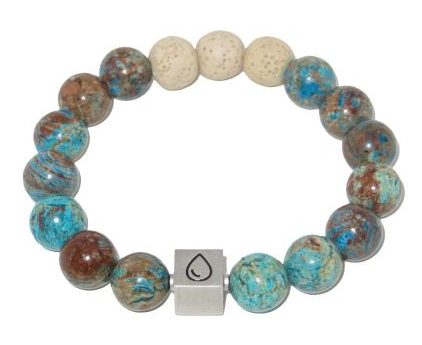
The “Ancient Agate” diffuser bracelet is handmade with premium, semi-precious 12mm Decorative Pattern Agate stones, 3 beige lava stones and a custom stainless steel cube.
Agate is known for its slow and steady healing properties and is said to bring harmony and balance to body, mind and spirit. Like lava stone, it has a grounding energy and will bring you strength and stability in times of need.
I asked for the small size and was pleasantly surprised when it actually fit my tiny wrists!
FAQs
How do I use diffuser jewelry with essential oils?
Just add a drop or two of your favorite oil to the porous lava beads. Give it a couple minutes to soak in so the oil won’t rub off of the beads and leave a mark on your sleeve. If that happens, just use this nifty stain roller and it will come right out.
Which oils do you recommend?
I recommend using the emotional aromatherapy wheel to choose your blend. We use the oils from doTERRA’s emotional aromatherapy kit everyday. If you’d like to know more about why I love these specific oils for weary mamas, contact me. I’d love to chat more. Just contact me.
How long will the aroma last?
Depending on the oil a couple hours to a full day.
Can I use a different oil each day?
Yes! You can use a different oil each time you add oils to your bracelet.
Where can I buy diffuser jewelry?
Essential Charms has kindly offered a discount for you awesome mamas. Just use the code CORK15 at check out for 15% your purchase. Essential Charms offers a wide variety of precious stone bracelets and diffuser charms for necklaces.
I’m parenting a challenging child a feel hopeless. What else can I do?
Join my FB parenting support group called Essentially Connected Parenting. My goal is to help you find hope again!
I received a free product in exchange for this post. However, I was using diffuser jewelry long before receiving a freebie and would still recommend it even without compensation. This post also contains affiliate links and I may be compensated if you make a purchase after clicking on my links.
]]> This week’s guest is adoptive mama extraordinaire, Nicole Pritchard. We chat about creative ways to meet the needs of kids from hard places and how to increase their tolerance over time. You’ll love her sacrifice and courage.
After you listen check out her blog at www.coffeecoloredsofa.com and meet up with her on Twitter @plainlyamess.
]]>
I’ve met amazing people during our family’s crazy journey, and the unCorked Podcast is my way of introducing their amazing stories to you!
Karen Harris is a veteran, homeschooling mama to many. She has a great sense of humor and no-nonsense parenting style. We chat about what she’s learned from decades of parenting and her new book project.
Her kids also recently released a new musical project.
Check them out at www.praisewarriors.com.
What was your biggest takeaway from Karen’s pearly words of wisdom? Tag your answer with #theuncorkedpodcast.
]]>
I’m currently in a mental battle that has been going on for the better part of a year.
“How unconditional should love really be?”
Or maybe the better question, “Does unconditional love equal unconditional relationship on the other person’s terms?”
I’m hoping not.
What if that person is a child of yours? Still hoping not.
For now, I’m going to start writing weekly letters. It’s something that I’m already doing with another one of the kids and Jay (the aged out foster youth who we tried to help but ended up in jail).
Letters feels safest. Ok, safest would actually be forgetting the relationship ever existed.
[bctt tweet=”safest would be forgetting the relationship ever existed, but…#olderchildadoption #adoptionishard” username=”corkboardblog”]
But letter writing feels safest while still believing that God has my back and will redeem this relationship in His time. They allow me to connect in a consistent, rhythmical way that protects me from an altered reality that’s meant to, in a reactive attachment kind of way, harm the mother figure in her life.
I know that what “feels” isn’t always the best way to make a decision, but I’m so bruised and tattered by this journey of loving people from hurt places. Hence the mental battle. Raw honesty? I need to pray more about it.
But I’m also hurt which is pairing up with my human need to be right…which of course I am 
Here’s to more prayer and more faith. In the meantime, I’ll add another person to my weekly letter writing ritual.
]]>
What I Envisioned
He would get up by 10AM because that’s the rule we all agreed upon. #sillyme
What really happened
He would “forget” to set an alarm or set it on the iPAD and then leave it somewhere around the house where it would annoy all of us at 10AM but not wake him up. If I wasn’t home, he would roll out when he naturally woke up which was after 1PM on more days that I’d rather admit. Let’s not mention that time I came home from a field trip with Ty after 3PM and found myself locked out. My ringing of the doorbell woke him up. After 3PM!
Traditional Parent Tendency
Before tapping into connected parenting, I would’ve reiterated the rule with a consequence that went something like, “If you’re not up by 10am, you lose your video game privilege for the day.” The problem with this is that it doesn’t provide any additional tools to my child and creates lots of turmoil and tension. If I’m completely honest with myself, not waking up on time and an entire day of lost privilege is probably overdramatic. What if I could find a more effective, simpler solution that didn’t evoke more teenage angst than we’re already due?
[bctt tweet="What if I could find a simpler solution that didn’t evoke more #teenage angst? #parenting" username="corkboardblog"]
The Compromise
My inner dialogue went something like this:
“If sleeping in is the worse part of his teenage years, count your blessings.”
“How can anyone possibly sleep until 3PM?!?!”
“He’s obviously showing you that he doesn’t have the ability to get up at 10AM without some help.”
“This isn’t hard! I had to get up on my own starting in 6th grade. I even remember when my mom bought me my first alarm clock that school year.”
Ding, ding, ding, ding, ding! Alarm clock. When I was in 6th grade, my alarm clock was permanently set and plugged into the wall near my bed, and it’s only job was to get me up each morning. There was no, “I set my alarm but left it on the kitchen table.”
I set off to find an “old-fashioned” alarm clock. By “old-fashioned,” I mean a digital radio alarm clock. Set it for 10am and plugged it in next to his ear. Problem mostly solved.
Alternative Solution
Send in the irresistibly cute nephew to bounce the sleepy teenager awake. The sleepy teenager is way more receptive to the irresistibly cute nephew bouncing him awake as opposed to the sing-songy voice of the chipper mom announcing, "Wakey, wakey! Eggs and bakey!" and throwing back the covers--especially when there's really no "eggs and bakey."
The Rest of the Story
In a decision left completely up to him, PJ has decided to try out public school in the fall. While I know he's looking forward to the social aspects, I think he also knows he needs some additional accountability in his life--and self-imposed accountability is so much better. Stay tuned. I imagine there will be some forthcoming tales on our learning curve of how to get this particular teenager acclimated to a new "normal."
If you parent (or have parented) teens, what is your wake-up routine? How do you keep them accountable?